King Charles In Washington: Why This ‘Feel‑Good’ Royal Visit Really Matters For America’s Future
If you are rolling your eyes at all the King Charles state visit Washington 2026 coverage, that is fair. A lot of it has looked like hats, handshakes, fancy china, and staged smiles at a moment when plenty of Americans are worried about safety, elections, and whether their leaders can handle real pressure. After a week shaped by a shooting scare and more political ugliness, a royal visit can feel like pure distraction. But this one is not just soft news. It is a live check on something more serious. Can the United States still project steadiness, hold close alliances together, and show the world that its politics have not broken its ability to lead? That is why this matters. The beehive visit, the White House welcome, and the state dinner are the visible part. Underneath is the real story: trust, security, trade, climate cooperation, and defense ties between two countries that still do a lot of business together.
⚡ In a Hurry? Key Takeaways
- King Charles’s Washington visit matters because it is really about U.S.-UK trust, trade, defense, and global stability, not just royal pageantry.
- When you hear about photo ops or a state dinner, ask what policy message is sitting behind the image, especially on security, climate, and economic ties.
- For Americans, the value is context. This visit is a test of whether the U.S. can still look calm, reliable, and influential during a tense political moment.
Why this visit matters more than it looks
The easiest way to think about this visit is to separate the show from the job.
The show is obvious. Royal arrivals. Motorcades. Garden moments. Cameras everywhere. The job is less obvious. The British monarch, while not a day-to-day policymaker, is still a huge diplomatic asset for the United Kingdom. When King Charles travels to Washington, he carries symbolism that elected officials often cannot. He can signal continuity, steadiness, and long-term partnership.
For the U.S., hosting him well is not just about courtesy. It is about sending a message to allies and rivals. America is still organized. America is still trusted. America can still manage relationships that matter even when its own politics are tense.
This is really a stress test of American power
That may sound dramatic, but it is the simplest explanation.
Power is not only tanks, sanctions, or trade numbers. A big part of power is whether other countries believe you are dependable. If allies start to doubt that, every future negotiation gets harder. Defense deals get slower. Shared intelligence gets more politically delicate. Joint work on energy, technology, and supply chains gets messier.
The King Charles state visit Washington 2026 story lands at a sensitive moment because the U.S. is trying to look stable after a high-profile security scare and in the middle of a bruising election cycle. In that setting, every image matters. Not because images solve problems, but because they shape confidence.
What allies are watching
Britain is watching whether Washington can separate domestic noise from state business. Other allies are watching too. They want to know if America still has the muscle memory of leadership. Can it protect a major guest? Can it hold a disciplined message? Can it treat alliance management as something bigger than campaign-season theater?
If the answer looks shaky, people notice. If the answer looks calm and competent, that matters too.
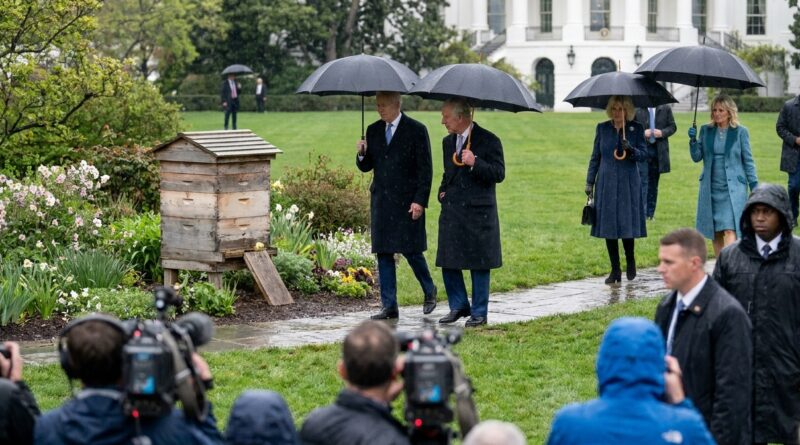
The beehive photo op is not random fluff
At first glance, the beehive moments seem like classic feel-good filler. Nice pictures. Easy smiles. Something human and harmless.
But even that has a purpose. King Charles has spent decades building a public identity around environmental causes, sustainable agriculture, biodiversity, and land stewardship. Whether you agree with every part of that record or not, it is central to how he operates on the world stage.
So when a visit includes bees, gardens, or conservation themes, the signal is clear. The U.S. and UK are trying to show that their alliance is not stuck in the Cold War playbook. It still includes defense, yes, but it also includes food systems, climate resilience, energy security, and scientific cooperation.
That matters to ordinary Americans more than it may seem. Why? Because those issues affect prices, jobs, farming, infrastructure, insurance costs, and how both countries prepare for supply shocks.
What the state dinner is actually for
A state dinner sounds ceremonial because it is ceremonial. But it is also a tool.
These dinners help leaders gather business figures, diplomats, military officials, cultural voices, and political players in one room under a controlled message. The point is not the menu. The point is alignment.
Done well, a state dinner says: these two countries are still in sync, still talking, still able to gather serious people around common goals.
That can support work on:
- Defense cooperation and intelligence sharing
- Trade and investment confidence
- Research, health, and university partnerships
- Energy and climate planning
- Joint messaging to adversaries
No single dinner changes your life overnight. But these moments can grease the wheels for decisions that do.
Why Americans should care about the U.S.-UK relationship right now
Because this is one of those alliances that often works quietly in the background until something goes wrong.
Defense and intelligence
The U.S. and UK are deeply tied on security. They share intelligence at a very high level. They work closely through NATO. They often move in parallel on global crises. If that relationship weakens, the effects do not stay in diplomatic cables. They show up in how quickly the West responds to threats.
Trade and investment
Britain is not just a ceremonial friend. It is a major economic partner. Investment flows both ways. American companies use the UK as a gateway into Europe and beyond. British firms support jobs in the U.S. A warmer, steadier relationship can help lower friction and build confidence at a time when global markets already feel jumpy.
Technology and supply chains
From AI policy to telecom security to advanced manufacturing, the U.S. and UK often act as close policy cousins. The more trust there is at the top, the easier it is to coordinate on standards, restrictions, and long-range planning.
Why the timing matters so much
If this visit happened in a quiet month, it would still matter. But it would not feel as loaded.
The timing is what gives it extra weight. America is in one of those periods when every public event gets pulled into the broader argument about competence, safety, and national direction. A recent security scare raises the stakes for every high-level gathering. A bitter election cycle makes every gesture look political, even when it is aimed outward at allies.
That means this visit becomes a mirror. It reflects how much control the White House seems to have, how disciplined the message is, and whether the country can still act bigger than its daily outrage machine.
What not to overread
It is also worth staying grounded.
This trip does not mean a sudden new era is here. It does not erase disputes between the U.S. and UK. It does not solve domestic division in either country. And because the British monarch is a constitutional figure, he is not arriving to negotiate line-by-line policy the way a prime minister would.
So if you see coverage that treats this as either meaningless fluff or a world-changing summit, both takes are too simple.
The truth is in the middle. Symbolic visits matter because symbols affect trust. Trust affects policy. Policy affects real life.
How to talk about this without getting trapped in the spectacle
Here is the simple filter to use when clips and memes start flying:
Ask three questions
First, what message is the U.S. sending to allies?
Second, what message is Britain sending about its place in the world?
Third, what practical areas might get stronger because both sides chose to stage this visit in such a visible way?
If you use those three questions, the story gets clearer fast.
What this says about America’s future
This is the big piece many headlines skip.
America’s future is not shaped only by domestic policy fights. It is also shaped by whether the country keeps strong, trusted relationships with allies that can help share burdens in defense, trade, science, and diplomacy. The U.S. cannot afford to look isolated, erratic, or unable to host and reassure top partners.
So yes, this visit is about King Charles and Queen Camilla. But in a deeper sense, it is about whether America still knows how to project confidence under pressure. That is the part worth paying attention to.
At a Glance: Comparison
| Feature/Aspect | Details | Verdict |
|---|---|---|
| Public spectacle | Photo ops, ceremony, royal attention, and a state dinner dominate the visuals. | Important, but only the surface layer. |
| Strategic value | Signals stability in U.S.-UK relations on defense, trade, intelligence, and global coordination. | This is the real reason the visit matters. |
| Impact on everyday Americans | Indirect but real, through jobs, investment, security, energy planning, and America’s standing with allies. | Not immediate, but worth understanding. |
Conclusion
The easiest way to miss the point of the King Charles state visit Washington 2026 story is to focus only on the sparkle. The better way is to see it as a serious check on America’s ability to stay trusted, calm, and useful to its allies during a tense moment. That is why this helps the community today. Most coverage is stuck on spectacle. A clear, no-nonsense explainer shows why a British monarch’s trip to Washington, so soon after a major security scare and in the middle of a bitter election cycle, is actually a stress test of American power. It connects the symbolism to the parts that really count: trade, defense deals, diplomatic trust, and the country’s image of steadiness. Once you see that, this stops being just royal gossip. It becomes a smarter way to understand the news, and to talk about it with more than clips and memes.