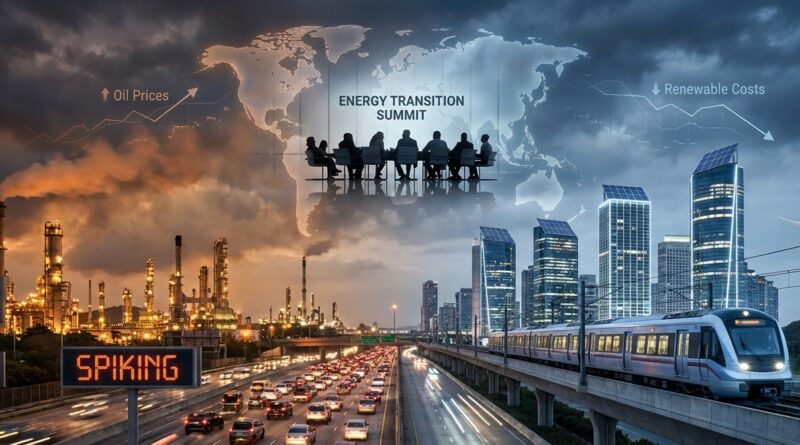
America’s New Fossil Fuel Exit Shock: How a Quiet Global Summit Could Hit Your Gas, Power Bills and Paycheck
You can be forgiven for feeling whiplash. One day the news is about war in the Middle East and a possible oil spike. The next day it is climate summits, carbon rules and politicians arguing over gas stoves, EVs and drilling. Meanwhile, you are just trying to figure out why your utility bill is up, whether gas will jump again, and what all this means for your job and retirement savings. That frustration is real. The big issue is that a fossil fuel phase out is no longer just a slogan from activists or diplomats. It is slowly turning into policy, utility planning, investor pressure and state rules. That means the fossil fuel phase out impact on US energy prices could show up in very ordinary places. Your monthly power bill. Your commute. Your rent. Even the health of pension funds tied to oil, gas and utility stocks. The quiet meetings matter because they help decide who pays first, who gets protected and who gets left exposed.
⚡ In a Hurry? Key Takeaways
- A global fossil fuel exit would not hit every American the same way. Oil affects gas prices fast, while electricity costs depend more on your state, local utility and how quickly cleaner power replaces old fuel plants.
- If you want to protect your budget now, start with home efficiency, fixed rate power plans where available, and a close look at how much of your monthly spending depends on gasoline and natural gas.
- The biggest risk is not just higher prices. It is a messy transition where families, workers and regions tied to oil, gas and refinery jobs get squeezed before replacement jobs and cheaper clean energy fully arrive.
Why this quiet summit matters to your wallet
When governments meet to talk about phasing out fossil fuels, it can sound distant and abstract. It is not. These talks shape lending rules, insurance costs, utility planning, trade policy and carbon pricing. In plain English, they help decide whether coal plants retire sooner, whether gas pipelines get financed, whether oil demand is expected to peak faster, and how expensive it becomes to keep using high carbon energy.
That matters because markets do not wait for a final press release. Investors move early. Utilities file rate cases early. Employers start hiring or freezing projects early. If global leaders signal that oil, gas and coal will be pushed out faster, capital starts flowing away from some fossil fuel assets and toward power grids, batteries, renewables, nuclear upgrades and efficiency projects.
The problem is that transitions are rarely smooth. If supply gets cut or discouraged before alternatives are fully built, prices can jump. That is the part families usually feel first.
What “phase out” actually means in normal life
A lot of people hear “phase out” and picture someone turning off the gas overnight. That is not how this works. A fossil fuel phase out usually means a mix of things happening over years.
1. Fossil fuels get more expensive to finance
Banks, insurers and big funds may charge more to back new oil, gas and coal projects. That can reduce future supply growth.
2. Utilities are pushed to switch their power mix
States and regulators may require more wind, solar, storage, nuclear support or cleaner gas plants with tougher emissions limits.
3. Carbon rules slowly raise the cost of polluting
That can happen through direct carbon pricing, methane rules, fuel standards or stricter emissions permits.
4. Consumers get nudged into alternatives
Think EV incentives, heat pump rebates, tougher appliance rules and building codes that discourage new gas hookups.
None of these changes hit your budget in exactly the same way. Gasoline is tied closely to global oil markets. Your electric bill depends more on local utility choices, transmission costs, storm repair, fuel contracts and state regulations. Your heating bill depends a lot on whether your home uses natural gas, electric resistance heat, a heat pump, propane or heating oil.
The biggest short term shock is still oil
If you are worried about immediate pain, look first at oil. Wars, sanctions and shipping disruptions can raise crude prices quickly. That feeds into gasoline, diesel, airline tickets, delivery costs and eventually grocery prices. So even if a fossil fuel exit plan is aimed at the long term, any sign that oil supply might tighten before demand falls enough can spook markets.
That is why the Iran war angle matters here. When conflict raises fears about production or shipping through key routes, traders price in risk. Americans see it at the pump fast. A formal or informal global push to shrink fossil fuel use can add another layer of uncertainty if producers cut investment while the world still needs a lot of oil.
Put simply, if supply drops faster than demand, prices usually rise. If demand falls faster than supply because EVs, transit, efficiency and cleaner heating catch on, prices can ease. We are in the awkward middle period where either outcome can happen.
Electric bills are a different story
Here is where many headlines confuse people. Oil prices and electric bills are not the same thing in most of the US. America does not generate most of its electricity from oil. Power prices are driven more by natural gas, coal, nuclear, renewables, transmission buildout, weather and utility spending.
So what is the fossil fuel phase out impact on US energy prices when it comes to electricity? Usually this:
- In the short run, bills can rise if utilities spend heavily on new grid upgrades, batteries, transmission lines and plant retirements.
- In the medium run, bills may stabilize or even improve if cheaper wind, solar and storage reduce fuel costs.
- In the long run, the cheapest systems are often the ones less exposed to fuel price spikes, but only if the grid is built well and reliability is protected.
This is why some states may see higher rates before they see savings. Building the new system costs money. Keeping the old system running during the handoff costs money too. Customers often end up paying for both at once for a while.
Who is most exposed
Not every household, city or worker faces the same risk.
Households most at risk
- Families with long commutes in gas powered vehicles
- Renters in drafty homes with poor insulation
- Homes heated by propane, heating oil or older natural gas systems
- Lower income households with little cash for efficiency upgrades
Regions most at risk
- States where electricity still leans heavily on fossil fuels and big grid upgrades are overdue
- Oil and gas producing areas where tax revenue and jobs depend on drilling, refining or pipeline activity
- Rural areas where driving is not optional and transit is limited
Workers most at risk
- Refinery workers
- Pipeline and field service crews
- Communities built around extraction, processing or fuel transport
Some of these workers can move into grid, nuclear, carbon management, manufacturing or construction jobs. But that only works if training, wages and local investment show up in time. Too often, they do not.
What happens to rent and groceries
Rent can rise when utility costs rise, especially in apartment buildings with older heating and cooling systems. Landlords pass on some of those costs, either directly through utility billing or indirectly through higher rents. New building rules can also raise construction costs at first, though efficient buildings can lower tenant energy bills later.
Groceries get hit in a more roundabout way. Diesel prices affect farming, shipping and refrigeration. Natural gas matters for fertilizer. Electricity matters for storage and processing. So a rough energy transition does not stay in the “energy” lane. It touches almost every aisle in the store.
Your retirement account may be in this too
This part gets less attention than it should. A lot of retirement funds hold oil majors, pipeline companies, utilities, industrial firms and banks that finance energy projects. A faster fossil fuel exit can cut into some legacy assets while boosting companies tied to transmission, efficiency, nuclear, renewables, grid software and storage.
That does not mean you should panic sell your 401(k). It means you should know what you own. If your retirement is concentrated in old energy firms, your risk is different from someone invested more broadly. If you own utility stocks, watch how those utilities recover transition costs from customers and how they handle stranded fossil assets.
Why Washington is not the whole story
Federal fights get the headlines, but states, utility commissions and regional grid operators often decide what you pay. They approve new power plants, transmission lines, rate hikes and grid upgrades. They decide how quickly old fossil plants retire and what replaces them.
That is why two families in different states can live through the same global energy story very differently. One may get hit by rising gas prices but have stable electric bills because its utility locked in cheaper long term power. Another may face both expensive gasoline and rising electric rates because the local grid needs major upgrades.
What households can do right now
You cannot control oil markets or summit language. You can lower your exposure.
Cut the energy waste first
The cheapest energy is still the energy you do not use. Seal drafts. Change HVAC filters. Use a smart thermostat if it actually fits your routine. Ask your utility about free or low cost home audits. If you rent, ask for weather stripping, attic insulation or a water heater tune up.
Look at your transport math honestly
If gas prices jump, the biggest pain often comes from miles driven, not just the pump price itself. Combining trips, carpooling one or two days a week, keeping tires inflated and driving a little slower can make a real difference.
Know your utility rate options
Some areas offer time of use rates or budget billing. Some let you lock in supply prices. These are not always better, but they are worth checking before the next spike hits.
Plan your next appliance purchase early
Do not wait for a furnace or water heater to die in the middle of winter. Learn now what a heat pump, induction range or high efficiency gas replacement would cost. Rebates come and go. The best time to compare is before you are desperate.
Check your emergency cushion
If your household budget gets wrecked by a 20 percent jump in fuel or electric costs, that is useful information. Build even a small buffer if you can. Energy shocks tend to land with other inflation at the worst possible time.
What local leaders should do before the next shock
City councils, mayors, county officials and public utility boards do have tools here.
- Target bill relief and weatherization for lower income households first
- Speed up grid upgrades that improve reliability, not just press release goals
- Protect workers in refinery and extraction regions with retraining linked to actual jobs
- Push for transparent utility filings so customers can see what transition costs they are being asked to pay
- Support housing upgrades so renters are not trapped in high bill buildings
The worst outcome is a transition designed on paper but dumped on families with no cushion.
The most likely path from here
A full overnight fossil fuel exit is not realistic. A messy, uneven and politically contested drawdown is much more likely. That means years where oil demand softens in some sectors while planes, trucks, petrochemicals and heavy industry still use a lot. It means electric grids adding cleaner power but also leaning on natural gas longer than some activists want. It means some states racing ahead and others resisting.
For consumers, the biggest lesson is simple. Expect volatility, not a clean straight line. Prices may fall in one area and rise in another. Your best defense is lowering your dependence on the most volatile fuels while keeping an eye on local utility decisions that often matter more than international speeches.
At a Glance: Comparison
| Feature/Aspect | Details | Verdict |
|---|---|---|
| Gasoline prices | Most exposed to global oil shocks, war risk and any sign supply may tighten before demand drops enough | Highest short term risk for households |
| Electricity bills | Driven by local utility spending, grid upgrades, natural gas prices and state policy more than crude oil alone | Mixed outlook, costs may rise before savings show up |
| Jobs and retirement accounts | Oil and gas regions face more disruption, while funds tied to legacy energy may see pressure during a faster transition | Manageable with planning, risky if ignored |
Conclusion
The reason this story matters now is that global talks on phasing out fossil fuels are not separate from your day to day life, even if the coverage often treats them that way. They connect directly to what you pay for driving, heating, cooling, groceries and housing. They also shape where jobs grow, which communities get squeezed and how stable your investments may be. The good news is that this is still a period where households and local leaders can prepare. If you understand the fossil fuel phase out impact on US energy prices early, you can make smarter choices before the next shock hits. That means cutting waste, watching local utility plans, protecting vulnerable workers and not waiting for Washington to sort everything out first. The families and towns that do best in a messy transition will be the ones that plan ahead instead of getting surprised.