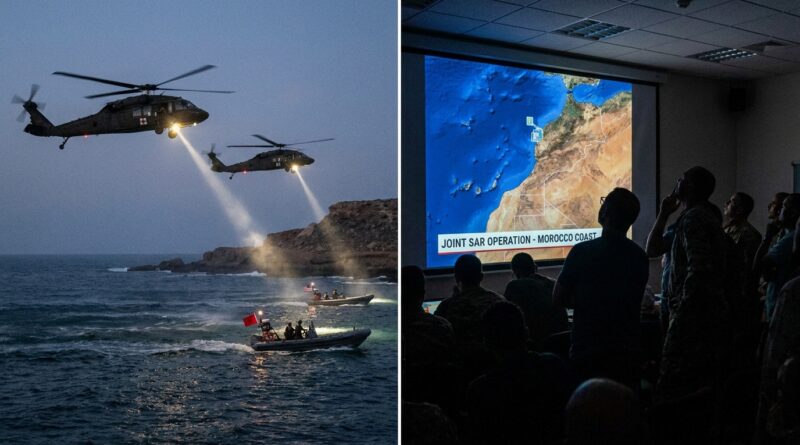
2 U.S. Troops Missing In Morocco: What A ‘Routine’ Exercise Really Means For American Families
Hearing that U.S. troops are “missing during a routine exercise” is the kind of phrase that turns a normal day into a nightmare for military families. It sounds calm and technical, but nobody at home hears it that way. They hear danger, confusion, and a clock that suddenly feels very loud. In the case of US troops missing during military exercise in Morocco, the hardest part for families is often the gap between the official statement and the questions that matter most. What happened? How risky was this mission really? Who is searching, and how quickly? “Routine” in military language does not mean risk-free. It usually means the mission was planned in advance, approved through normal channels, and not part of active combat. But troops can still face rough terrain, vehicle accidents, medical emergencies, bad weather, navigation problems, and communication failures. For families, that distinction matters, but only up to a point. The fear is real either way.
⚡ In a Hurry? Key Takeaways
- “Routine exercise” means preplanned training, not zero danger. Troops can still go missing because of accidents, terrain, weather, or equipment problems.
- If you have a loved one deployed, rely first on official casualty assistance channels and unit family readiness contacts, not rumor-heavy social media posts.
- Families should expect some information delays early on, but they also have a right to clear updates once facts are confirmed and next of kin are notified.
What “routine exercise” actually means
Military language often sounds colder than real life. That is part of the problem.
When the Pentagon or a combatant command calls something a routine exercise, they usually mean it was scheduled training. Not an emergency operation. Not a surprise deployment. Not combat in the formal sense.
That does not mean it was simple. It also does not mean it was safe in the way most civilians use that word.
Exercises like African Lion, the large multinational training event often held in Morocco and nearby regions, can include live-fire drills, convoy movements, aircraft operations, medical training, communications tests, and long movements across difficult ground. Any one of those pieces can go wrong.
Why training can still be dangerous
Think of it like a fire drill versus a real fire. The drill is planned. People know it is coming. Safety steps are in place. But if you are practicing with real trucks, aircraft, weapons systems, heavy gear, or in harsh environments, there is still risk.
For troops in Morocco, those risks can include heat, dehydration, remote areas, mountain or desert terrain, vehicle rollovers, nighttime navigation issues, and plain old human error. Training accidents are not common compared with the total number of exercises run every year, but they are real enough that every branch has detailed safety rules built around them.
Why Morocco matters in the first place
Most Americans pay close attention to Europe, the Middle East, and the Pacific. Africa gets far less attention unless something goes badly wrong. That is one reason stories like this can feel so sudden.
Morocco is one of the United States’ most established security partners in North Africa. The annual African Lion exercise is meant to improve coordination between U.S. forces and partner nations. That can include logistics, readiness, disaster response, air operations, and ground training.
From Washington’s point of view, the goal is pretty straightforward. Build relationships now so the U.S. and partner militaries can respond faster later, whether the issue is terrorism, regional instability, or humanitarian disaster.
For families, though, the strategic logic is not the first concern. The first concern is much simpler. If this was training, why are people missing?
How an exercise like African Lion gets approved
This part rarely makes headlines, but it helps explain what protections are supposed to exist before troops ever leave home.
There is planning before the first boot hits the ground
Major overseas exercises do not just happen because someone had an idea. They go through layers of planning involving the combatant command, host nation coordination, force protection reviews, medical support planning, transportation, communications, and legal approvals.
Risk assessments are a big part of that process. Commanders look at threats from hostile actors, but also more ordinary dangers like road conditions, weather, local medical access, and evacuation options.
“Approved” does not mean “guaranteed safe”
This is the uncomfortable truth. A mission can meet every rule on paper and still go wrong. Military planning reduces risk. It does not erase it.
That is especially true in large joint exercises where units from different countries, using different equipment and procedures, have to work together in real conditions.
What usually happens when troops go missing during training
In the early hours, information is almost always thin. That is frustrating, but it is normal.
The first priority is the search
Once a service member is unaccounted for, commanders focus on accountability, last known location, communications checks, route tracking, and immediate search efforts. Depending on the setting, that can involve U.S. units, host nation forces, aircraft, drones, medical teams, and local authorities.
When the incident happens during a multinational exercise, coordination can be slower than families want because more than one chain of command may be involved. That does not always mean incompetence. Sometimes it simply means confirming facts across several teams before making a public statement.
Families are usually notified before the public gets details
That process matters. The military generally tries to notify next of kin before releasing names or specifics. So when the public statement feels vague, part of the reason may be that officials are trying not to get ahead of confirmed facts.
Still, families often get only partial information at first. If the situation is changing quickly, even command teams may not have a clean picture yet.
How much transparency families can realistically expect
This is where anger often builds. And honestly, some of that anger is fair.
The military is not always good at speaking plain English when something bad happens. Statements can sound sanitized. Words like “incident,” “mishap,” or “personnel accountability issue” do not tell families much.
What families should expect early on
At the start, updates may be limited to basic facts. A service member is missing. Search efforts are underway. The family has been notified. More information will follow.
That is common, especially overseas.
What families should expect after the first phase
Once the search is complete or the immediate emergency ends, there should be more substance. Families should expect a clearer timeline, more direct language about what happened, and an explanation of whether an investigation has started.
If that does not come, frustration usually gets worse for good reason.
What “investigation” usually means
If there is death, injury, lost accountability, vehicle damage, or major operational failure, a formal inquiry is often launched. That can involve command investigations, safety investigations, or both. One is meant to determine responsibility and facts. Another may focus on preventing the next accident.
Those reviews take time. Families often hate that answer, but it is true.
Why vague language hits military families so hard
If you have never lived with deployment or training cycles, it can be hard to understand why one short phrase can be so upsetting.
Military families live in a world of partial information. They get used to hearing “can’t talk long,” “details are limited,” or “we’ll know more soon.” So when an official statement says troops are missing during a routine exercise, it lands on top of years of learning that the first version of the story is rarely the full story.
That does not mean officials are always hiding something. But it does mean families learn to listen carefully for what is not being said.
What risks U.S. troops actually face in Africa
It is easy to assume the biggest dangers are always enemy attacks. Sometimes they are not.
Across Africa, U.S. forces can face militant threats in certain regions, but day-to-day risks also include transport accidents, aviation mishaps, medical emergencies, harsh environments, and long distances from major support hubs.
Morocco is not typically framed the same way as higher-threat zones elsewhere on the continent. But even in a relatively stable partner nation, training can involve remote areas and hard conditions. That matters more than the word “routine.”
Common non-combat risks during overseas exercises
Here are the risks that often matter most during training:
- Vehicle accidents during convoy or off-road movement
- Aircraft incidents during transport or support missions
- Heat injuries and dehydration
- Falls, navigation errors, and separation from units
- Equipment failure or communications loss
- Delayed medical response in remote locations
None of that is dramatic movie stuff. But it is exactly the kind of thing that can turn a planned mission into a crisis.
What families can do while waiting for answers
This is the part no one wants to need. But it helps to know it before bad news hits.
Use official family channels first
If you have a loved one connected to the incident, the best source is usually the official chain tied to the service member’s unit. That might be a casualty assistance officer, family readiness contact, or command representative.
Social media can move faster, but fast is not the same as accurate.
Write down every update
When people are stressed, details blur. Keep a simple log with times, names, phone numbers, and what you were told. It helps more than you might think.
Ask direct questions
You may not get every answer, but you can still ask clear questions. Was the service member on a ground movement or air movement? Who is leading the search? Has the host nation been involved? Is there a timeline for the next update?
Expect revisions
Early information changes. Painfully often. That does not automatically mean someone lied. It may simply mean the first report was incomplete.
What this says about the broader U.S. footprint in Africa
Stories like this pull back the curtain a bit. Americans hear a lot about military aid, partnerships, and exercises, but not much about the everyday mechanics or the human cost when things go wrong.
The U.S. presence in Africa is smaller and less publicly discussed than in Europe or the Middle East, but it is still meaningful. Training missions are part of that presence. So are intelligence cooperation, logistics, and regional partnerships.
That is why incidents involving US troops missing during military exercise in Morocco matter beyond one terrible news cycle. They remind people that even operations outside declared war zones carry real danger.
At a Glance: Comparison
| Feature/Aspect | Details | Verdict |
|---|---|---|
| “Routine” exercise label | Means preplanned and approved training, not combat-free or risk-free conditions. | Useful term for planners, misleading term for families. |
| Family transparency | Early details are often limited while search efforts and next-of-kin notifications happen. | Some delay is normal, but clearer updates should follow. |
| Actual troop risk in Morocco exercise | Main dangers are often terrain, transport, weather, heat, isolation, and coordination issues. | Lower profile than combat, but still serious. |
Conclusion
When officials say troops went missing during a routine exercise, families hear the one part that matters. Someone they love may be in danger, and the facts are still not clear. That is why plain English matters. This story is bigger than one phrase in one press release. It is about understanding what U.S. troops are actually doing in places like Morocco, what kinds of risks they face even outside combat, and what families should reasonably expect when something goes wrong. The goal is not to create panic. It is to replace foggy Pentagon wording with a more grounded picture of how African Lion and similar missions work, what safeguards exist, and where those safeguards have limits. For ordinary readers, that is the value here. It gives you a more honest way to think about America’s growing military role in Africa, and a clearer sense of what “routine” really means when the news turns personal.