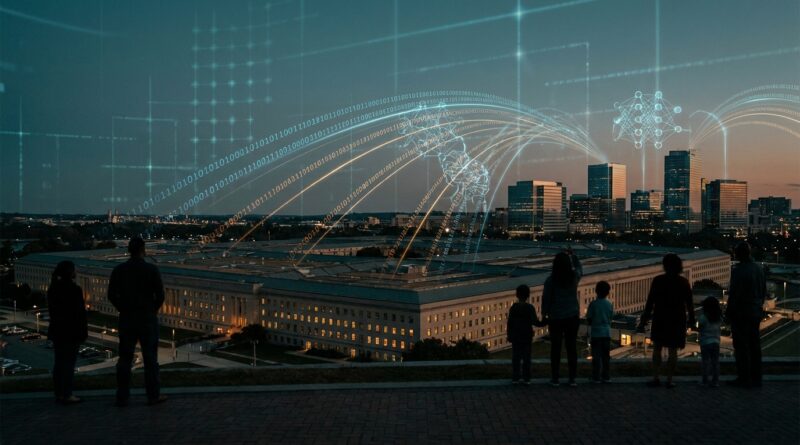
Pentagon’s Quiet AI Deal: What A New Military-Tech Pact Really Means For Your Privacy And Job
You are not wrong to feel shut out of this story. Most coverage of the Pentagon’s new AI agreements makes it sound like a niche fight between generals, contractors, and cable-news regulars. But when the Defense Department starts buying advanced AI tools from major tech companies, the ripple effects rarely stay on a military base. They can shape the software your local police department buys, the screening tools used in public schools and hospitals, and the kinds of office and analyst jobs that get trimmed or rewritten in your region. The big question is not just who won the contract. It is what these systems will be allowed to do, what data they can touch, and who gets to check their work. If you are wondering whether this means more surveillance, fewer jobs, or better national defense, the honest answer is yes, parts of all three are now on the table. The details matter, and so do the guardrails.
⚡ In a Hurry? Key Takeaways
- The Pentagon AI deals with tech companies 2026 impact will likely be felt first in surveillance software, military logistics, intelligence analysis, and nearby civilian government tech systems.
- If you work in admin, analysis, cybersecurity support, mapping, or data processing, pay attention now. The safest move is to build skills in oversight, auditing, security, and human review of AI tools.
- These deals do not automatically mean the government can spy on everyone, but weak transparency rules could let military AI ideas spill into policing and public-sector databases without much public debate.
What actually happened
The Pentagon has been moving toward deeper use of artificial intelligence for years, but the new round of agreements matters because it pulls top commercial AI firms closer into day-to-day defense work. That usually means cloud access, language models, image analysis, logistics planning, intelligence sorting, cybersecurity tools, and software that helps commanders make decisions faster.
Some details are public. A lot are not. That is normal in defense contracting, and it is exactly why regular people get uneasy. When the government says a system will help with “situational awareness” or “decision support,” that can mean anything from summarizing reports to flagging possible targets from drone footage.
The key point is simple. These are not just battlefield tools. Once government agencies get comfortable with a new AI vendor or workflow, similar systems often spread into other parts of government and then into private business too.
Why this matters outside the military
If this were only about tanks and ships, most people could safely tune out. It is not. Pentagon buying patterns often shape the wider tech market in the United States.
Here is how that usually works. The Defense Department funds or validates a technology. Big vendors scale it up. Other federal agencies copy it. State and local governments buy cheaper versions later. Private employers adopt related tools because the vendors are already established and trusted in Washington.
So a military AI contract can quietly influence:
- Police facial recognition and video search tools
- School security and student monitoring systems
- Hospital and insurance fraud detection software
- Hiring, screening, and scheduling tools in large employers
- Regional demand for cloud, data labeling, and security workers
This is why the story feels bigger than a defense budget line item. It is really about what kind of automated state and workplace people will be living with in the next few years.
Will this watch you?
Possibly, but usually sideways
Most Americans are not going to be directly watched by a Pentagon chatbot. That is the good news. The less comforting news is that military AI development can still affect your privacy in indirect but very real ways.
AI systems need data. In defense work, that can include satellite imagery, communications metadata, logistics records, procurement information, cyber threat feeds, open-source internet content, and sometimes data gathered from partner agencies or contractors. Even when a military system is not supposed to use domestic personal data, the techniques developed for one setting can drift into another.
That drift is what privacy advocates worry about. A tool built to spot suspicious movement patterns abroad can inspire software later sold to local agencies for crowd monitoring. A system built to summarize intelligence can become a model for sorting school disciplinary records or public-benefits fraud cases.
So if you are asking, “Will the Pentagon itself read my texts?” that is usually the wrong question. The better question is, “Will Pentagon-backed AI normalize more aggressive data analysis across government?” That answer is much closer to yes.
What data is most at risk
The highest-risk categories are not always the most obvious. Watch these:
- Location data bought from data brokers
- Public camera feeds paired with AI search tools
- License plate databases
- Biometric data, including face and voice prints
- Large government records systems linked for pattern matching
Congress has talked for years about stronger privacy limits in this area, but the rulebook is still patchy. Some protections exist. Many loopholes still exist too.
Will this replace your job?
Some jobs, yes. Most jobs, partially.
This is where the story gets personal fast. Pentagon AI spending tends to boost some careers while squeezing others. It usually does both at once.
The first jobs likely to change are not front-line soldiers. They are support and knowledge-work roles built around sorting, reviewing, summarizing, or routing information. Think of work like:
- Intelligence triage
- Document review
- Procurement paperwork
- Help desk and internal support tasks
- Basic code generation and testing
- Image tagging and map annotation
- Cyber alert filtering
That does not always mean layoffs on day one. More often, it means fewer openings, smaller teams, and pressure on workers to supervise software instead of doing the original task from scratch.
If you live near a military base, a federal contractor hub, or a city with a lot of tech, healthcare, logistics, or government admin work, this matters even more. The tools funded through defense can become the standard tools employers expect everyone else to use.
Who may benefit
There will also be winners. People with these skills are likely to be in better shape:
- AI security and red-team testing
- Model auditing and compliance
- Data governance
- Cloud infrastructure
- Human-machine interface design
- High-stakes review roles where a person must sign off
- Training people to use AI safely inside organizations
If your current job is heavy on judgment, accountability, trust, and exception handling, you are usually safer than someone whose day is mostly repetitive digital sorting.
What the Pentagon says the AI is for
To be fair, there are real reasons the military wants these systems. AI can help process giant amounts of sensor data, detect cyber threats faster, maintain equipment before it fails, and cut some of the bureaucratic drag that frustrates troops and civilians alike.
Used carefully, AI can also reduce human overload. That matters in crisis situations. An analyst staring at ten screens of drone footage is more likely to miss something than a team using software to narrow the pile first.
But “used carefully” is doing a lot of work there.
The danger comes when leaders start trusting AI output as if it were neutral, objective, or smarter than it really is. Anyone who has seen a consumer chatbot confidently make things up knows the risk. Now imagine that same confidence problem attached to military planning, surveillance lists, or cyber response.
The biggest risks nobody explains well on TV
1. Secret scope creep
A contract starts with one purpose. Then it expands. More users get access. More data gets connected. More agencies want in. That is common in government tech.
2. Weak auditing
If the model produces a bad recommendation, who can inspect why? In many modern AI systems, that answer is still murky.
3. Contractor lock-in
Once a giant agency builds workflows around one vendor’s model and cloud stack, switching gets expensive and politically messy.
4. Civilian spillover
Military AI ideas often show up later in domestic systems. Sometimes that is useful. Sometimes it means people get treated like data points by tools they never agreed to.
5. False sense of precision
AI often looks more certain than it is. That can make flawed recommendations feel official.
What protections are actually in place?
Some exist, but they are nowhere near as clear or comprehensive as many people assume.
The Pentagon has AI ethics principles and internal guidance around responsible use, testing, reliability, and human oversight. There are also procurement rules, civil-liberties laws, classification rules, inspector general reviews, and some congressional oversight.
That sounds reassuring until you hit the fine print.
A lot depends on how agencies define “human in the loop,” what counts as testing, whether independent audits happen, and how much of the program is hidden behind classification or contractor secrecy. Congress can ask hard questions, but lawmakers often do not get technical detail early enough, and the public gets even less.
So the current system is better than nothing, but it is not a strong consumer-style protection framework. It is more like a patchwork of internal rules, procurement habits, and after-the-fact oversight.
How this could affect your town sooner than you think
Let’s bring this down from Washington to Main Street.
If your area has a defense plant, military contractors, a university research lab, or public-sector employers, these deals can shape local hiring and purchasing pretty quickly. A contractor that wins AI work may add cybersecurity roles while cutting clerical support. A state agency may buy a similar vendor’s case-management AI. A police department may be pitched “battle-tested” video analysis software. A school system may get sold automated threat detection tools built on the same family of technology.
This is why readers should care even if they never work in defense. National security technology rarely stays in one lane.
What regular people should do now
If you are worried about privacy
- Check whether your state has limits on facial recognition, data brokers, and biometric collection.
- Ask local officials what AI tools police, schools, and agencies already use.
- Support public-records requests and local reporting on government tech purchases.
If you are worried about your job
- List the tasks you do that are repetitive, text-heavy, or triage-based. Those are the first ones likely to be automated.
- Move toward review, exception handling, compliance, security, or client-facing work where human judgment matters.
- Learn enough AI literacy to supervise tools, not just compete with them.
If you are worried about both
Pay less attention to splashy demos and more attention to procurement language. The boring phrases matter. “Data integration,” “automated analysis,” “decision support,” and “threat detection” often tell you more about real-world impact than flashy robot headlines.
At a Glance: Comparison
| Feature/Aspect | Details | Verdict |
|---|---|---|
| Privacy impact | Direct military spying on ordinary Americans is not the main issue. The bigger risk is civilian spillover into policing, public databases, and biometric tracking. | Moderate to high concern, mostly indirect |
| Job impact | Clerical, analyst-support, review, and data-sorting roles are most exposed first. Oversight, security, auditing, and infrastructure roles may grow. | Real disruption, unevenly shared |
| Public safeguards | There are ethics principles and oversight channels, but many details remain secret and independent auditing is limited. | Not strong enough for full public trust |
Conclusion
The Pentagon’s new agreements with leading AI firms are a real turning point, not just a niche defense story for contractors and policy insiders. They will help shape surveillance rules, battlefield automation, and the future of high-tech work in the United States. The reason this matters to you is simple. These decisions can affect what tools local agencies buy, what data systems get linked, and what kinds of jobs grow or shrink in your area. The smartest way to read this story is not with panic and not with blind trust. Watch who gets the contracts, ask what data the systems can touch, and pay attention to whether Congress demands meaningful audits and limits. If you understand that much, you are already ahead of most of the TV coverage, and better prepared for how a quiet national security deal can show up in everyday life.