America’s New Street Takeover Crisis: How ‘Pop-Up’ Car Shows Are Quietly Rewriting Urban Safety
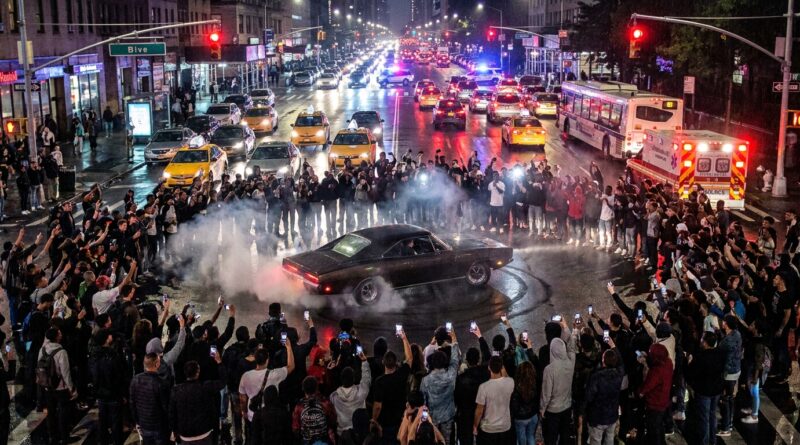
You should not have to plan your trip to the grocery store like an escape route. But for a lot of people living near big cities, that is starting to feel normal. A quiet intersection can turn into a street takeover in minutes. Cars flood in. Crowds pour into the road. Traffic freezes. Then come the burnouts, fireworks, shouting, and the sound every nearby resident hates most, tires screaming at 1 a.m. It looks chaotic on social media because it is chaotic in real life. The part that gets missed is the damage after the clip ends. Ambulances get delayed. Bus routes get cut off. Drivers panic and make bad choices. People on foot can get trapped with nowhere safe to stand. The crisis is not just noise or nuisance anymore. Street takeovers in major US cities are becoming a real public safety problem, and cities are still struggling to answer it without making things worse.
⚡ In a Hurry? Key Takeaways
- Street takeovers are no longer limited to a few famous hotspots. They are spreading into ordinary intersections in major US cities and creating real risks for drivers, pedestrians, transit, and emergency crews.
- If you encounter one, do not try to push through, film from the curb, or confront participants. Turn around early, stay in your locked car if boxed in, and call 911 only for immediate danger. Use your city’s non-emergency line or 311 for follow-up reports.
- The responses that help most are usually boring but effective: traffic design changes, fast cleanup, targeted towing and enforcement against organizers, and neighborhood reporting that gives cities patterns instead of random complaints.
What a street takeover actually is
A street takeover is not just a loud meet-up in a parking lot. It is when a group intentionally blocks an intersection or stretch of road so drivers can do donuts, drifting, burnouts, racing, or stunt driving while a crowd watches from all sides.
That distinction matters. A legal car show has permits, barriers, insurance, and basic safety rules. A takeover has none of that. It depends on surprise, speed, and crowd pressure. By the time police or traffic crews arrive, the group may already be moving to the next location.
This is why the clips look so hard to control. The event is designed to be temporary, mobile, and social-first. Organizers do not need flyers or a fixed venue. A few posts, group chats, and location drops are enough.
Why street takeovers in major US cities are spreading
There is not one single cause. It is a mix of internet culture, weak deterrence, copycat behavior, and city streets that are easy to block.
Social media rewards the most extreme version
Takeovers are built for video. Fire, smoke, spinning cars, people inches away from moving vehicles. It is dangerous, but it also gets views. Once one city becomes known for it, the style spreads fast. People in other places want to recreate the same energy locally.
Intersections are easy targets
Wide roads, oversized turns, and industrial areas with less foot traffic make ideal spots. So do places near freeways where groups can arrive and leave quickly. Many newer road designs prioritize car flow, which also makes them easier to shut down for stunts.
Police crackdowns can scatter, not solve
When officers rush in aggressively, crowds often split and regroup somewhere else. That can turn one dangerous location into three. It also raises the chance of fleeing drivers, side street chases, and more risk for bystanders who had nothing to do with the event.
The cost of joining feels low
For many participants, the odds of serious consequences still seem small. Cars may be unregistered, plates may be covered, and some cities simply do not have enough officers or tow capacity to respond in real time.
Why this is more than a nuisance
It is easy to dismiss street takeovers as just loud and annoying. Ask anyone who has been stuck near one, and you get a different picture.
Emergency response gets delayed
This is one of the biggest problems. A blocked intersection does not just inconvenience people heading home. It can slow ambulances, fire engines, and police units trying to reach an unrelated emergency nearby.
Transit systems get disrupted
Bus lines can be rerouted or stopped entirely. Riders may be let off early or stranded at unsafe corners at night. That matters most to the people with the fewest backup options.
Bystanders are at real risk
Stunt driving leaves little room for error. One clipped curb, one slip in traction, one person stepping out for a better video, and the scene turns from spectacle to trauma in seconds.
Neighborhoods absorb the aftermath
Broken glass, skid marks, trash, damaged signs, and residents who no longer feel comfortable walking outside after dark. The viral post moves on. The people living there do not.
How these events are usually organized
You do not need a big criminal conspiracy to create a takeover. In many cases, the setup is surprisingly simple.
A core group picks a rough meeting area. Smaller groups gather first at gas stations, parking lots, or industrial streets. Then the final location gets shared late, sometimes minutes before start time. Spotters watch for police. Drivers line up. Crowd cars block side access. Someone films everything.
The mobility is the whole point. If the crowd senses enforcement, they move. That is why residents often hear multiple waves of noise in different parts of the city on the same night.
Why some police responses keep backfiring
This part is tricky because nobody wants cities to do nothing. But not every tough-sounding response works.
Fast pursuit can raise the danger
Chasing drivers through dense city streets may satisfy the public mood in the moment, but it can also put more people at risk, especially when spectators are still spilling into traffic.
Mass show-of-force responses can miss the organizers
Big sweeps often catch the easiest targets, spectators and random nearby drivers, while the actual planners slip away. That breeds distrust without fixing the pattern.
One-night crackdowns do not change the street itself
If the same intersection stays wide open, poorly lit, and easy to enter from multiple directions, the event may return next weekend. Enforcement matters, but road design matters too.
What is actually helping in some neighborhoods
The solutions that seem to work best are not flashy. They are practical. They make the location harder to use, the event harder to promote, and the consequences more predictable for repeat offenders.
Physical street changes
Cities have had some success with speed humps, tighter turns, raised intersections, center medians, flexible bollards, and other design choices that make stunt driving harder. These do not stop every problem, but they can remove the perfect stage.
Targeted towing and vehicle seizure
Confiscating cars used in dangerous stunts gets attention in a way tickets often do not. The key is making this targeted and legally solid, aimed at drivers and organizers, not random people caught in the area.
Lighting, cameras, and faster cleanup
Better lighting and visible surveillance can reduce repeat use at known hotspots. Quick removal of debris and barriers also helps keep an area from signaling that it is available for the next event.
Pattern-based community reporting
One complaint about noise is easy to ignore. Ten reports that identify the same entry route, same hour, and same nearby meetup point are much more useful. Cities need patterns, not just outrage.
What to do if you drive into one by accident
This is the advice most people need right now, especially on weekends.
If you see it forming ahead, leave early
The safest move is the least dramatic one. Do not inch forward to see what is happening. Turn around while you still can. Use a well-lit side street or a navigation app to reroute.
If you are boxed in, stay calm
Keep your doors locked. Keep your windows up. Do not honk continuously unless it is needed to prevent a direct collision. Constant horn use can draw attention you do not want.
Do not try to drive through the crowd
Even at low speed, that can spark panic and put people in your path. It can also turn you into the person everyone starts filming and surrounding.
Do not confront participants
It is understandable to be angry. It is not worth it. You are outnumbered, adrenaline is high, and nobody there is in a calm, reasonable mood.
Call the right number
If there is immediate danger, injuries, weapons, fire, or someone actively trapped, call 911. If the event is loud, obstructive, or already dispersing, use non-emergency police or 311 if your city has it. That keeps emergency lines clearer.
If you have a passenger, let them document safely
Only if it can be done discreetly and without lowering windows or drawing attention. Focus on the location, nearest cross streets, time, and direction of travel. Do not lean out or try to capture faces up close.
What pedestrians and nearby residents should do
If you are on foot, your goal is distance and cover, not a better view.
Move inside a building if possible. Avoid standing at corners, medians, gas stations, or parking lot entrances. Those are common spillover zones. If you live nearby, bring pets in, keep children away from windows facing the street, and avoid stepping outside to see what the noise is.
If you are waiting on transit and a takeover starts nearby, move to a safer, brighter location and check service alerts. A delayed bus is frustrating. Standing at the edge of an active stunt scene is worse.
How to report it so the city can actually use the information
Most reports are emotional, which makes sense. But the most useful reports are specific.
- Exact location and nearest cross streets
- Time it started and whether it moved
- Approximate number of cars and spectators
- Any blocked bus route, crash, fire, or injury
- Whether plates were covered or cars entered from a known direction
If your neighborhood keeps seeing the same problem, organize with neighbors to log dates, times, and patterns over several weekends. That gives city staff something actionable. It is also more persuasive when asking for road changes or targeted patrols.
What cities should stop doing
They should stop acting like every takeover is solved by either total passivity or total force. Those are the two easy extremes, and both can fail.
Cities also need to stop treating each incident as isolated. If the same handful of design flaws, meetup points, and social channels keep showing up, then this is not random. It is a systems problem. Systems problems need coordinated fixes between police, transportation departments, transit agencies, and neighborhood groups.
What smarter city policy looks like
Smart policy is less about sounding tough and more about reducing harm.
That means using street redesign where locations are repeatedly targeted. It means enforcing against dangerous driving, organizers, and repeat offenders with solid evidence. It means protecting emergency access routes. It means giving residents a simple reporting path that does not feel like shouting into the void.
It also means remembering that not every car enthusiast is the problem. Cities should separate legal gatherings from dangerous street seizures. If officials treat every meet, cruise, or modified car event the same way, they risk pushing more activity underground.
At a Glance: Comparison
| Feature/Aspect | Details | Verdict |
|---|---|---|
| Immediate personal safety | Best response is to avoid, reroute, stay inside your locked vehicle if trapped, and keep distance from crowds and curb edges. | Most effective for staying safe tonight. |
| Police-only crackdowns | Can disperse an event, but often push it to another location and may raise risks if drivers flee. | Useful in parts, but weak as a stand-alone answer. |
| Street design and targeted enforcement | Traffic calming, bollards, medians, towing, and action against repeat organizers make hotspots less usable over time. | Best long-term approach in problem areas. |
Conclusion
Street takeovers are exploding across major US cities right now, yet most national coverage only shows the wildest clips without explaining how the trend is moving from a few viral corners of LA and Atlanta into ordinary intersections where people just want to get home from work. The good news is that residents are not powerless. Knowing how these events form, why some police responses backfire, and which neighborhood tactics actually help gives you real tools for this weekend, not just talking points for later. Stay back. Reroute early. Report patterns, not just frustration. Then push city hall and local law enforcement for the fixes that work in the real world. Safer streets usually come from steady, practical changes, not dramatic speeches. Right now, practical beats dramatic.