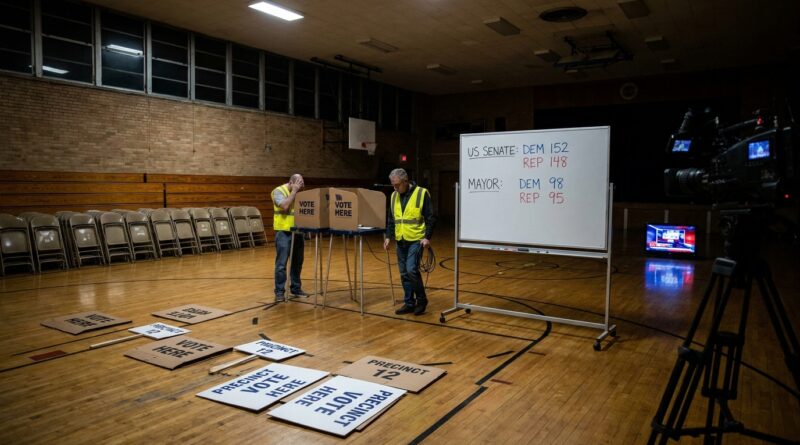
Democrats’ Surprise Special Election Surge: What Last Night’s Wins Really Signal For 2026
Trying to figure out whether last night’s election results actually matter can feel like sorting through a pile of loud TV chatter with no useful label on it. Most people do not have time to study every county map after work, after school pickup, or while worrying about groceries and rent. So here is the plain-English version. The recent special elections look like a real warning sign for Republicans and a genuinely encouraging sign for Democrats heading toward 2026. Not because one party had a “good night,” but because the pattern showed up in multiple places at once. Democrats overperformed. Republican margins shrank in spots that should have been safer. And the kinds of voters who often decide midterms, especially suburban voters and independents, seem more open to sending a protest message right now. That does not mean 2026 is decided. It does mean the public mood is showing up in actual votes, not just polls or social media noise.
⚡ In a Hurry? Key Takeaways
- Democrats’ strong special election results look like an early midterm signal, not just a one-night fluke.
- Watch turnout, suburban shifts, and independent voters more than dramatic cable-news talking points.
- Special elections are not a perfect crystal ball, but they are one of the best early clues about whether voter frustration is turning into action.
What happened, in simple terms
The big story is not just that Democrats won some races. It is that they ran stronger than expected in several closely watched contests, while Republicans posted weaker-than-expected margins in places they hoped would look more comfortable.
That matters because special elections are often treated like stress tests. They are lower-turnout, higher-attention races where especially motivated voters show up first. If one side is more energized, you often see it here before you see it everywhere else.
So when people search for “Democrats win big in US special elections 2026 meaning for midterms,” what they are really asking is this: are voters just annoyed for one night, or are they starting to move politically in a way that could shape the next big election?
Right now, the answer looks closer to the second one.
Why these results matter more than the usual spin
Special elections can show the country’s mood early
Think of special elections like the first few drops before a storm. One drop means nothing. A pattern does. If Democrats are improving in different kinds of districts, especially competitive ones, it suggests something broader may be happening.
These races can pick up voter feelings about prices, foreign conflicts, trust in government, abortion rights, and worries about democratic norms. Voters do not always explain all of that neatly in interviews. But they do show it in the ballot box.
Overperformance matters more than raw wins
A party does not need to flip every seat for the night to matter. Sometimes the real clue is margin. If Republicans win a district by 5 points that they usually win by 15, that is still a warning. If Democrats cut deep into that gap in multiple places, strategists notice fast.
That is why analysts focus on whether a candidate beat the district’s recent baseline. It is less about the headline and more about the trend line.
What changed under the surface
Turnout appears to be telling the real story
Special elections are often about who cares enough to show up. Last night’s results suggest Democratic voters may currently be more motivated in key races. That could come from anger, fear, or simply a stronger desire to check the other party’s power.
When turnout rises in suburban precincts or among younger and independent voters, it can create a bigger shift than people expect. A few points here and there do not sound dramatic. But in swing districts, that is the whole ballgame.
Suburban voters still look crucial
Suburbs continue to be the most useful political weather vane in the country. Rural areas are often more locked in. Deep-blue urban centers are usually predictable. The suburbs are where frustration gets translated into movement.
If Democrats are improving there again, even modestly, that is a sign they may be rebuilding the kind of coalition that helps in midterms. If Republicans are underperforming with college-educated voters, women, and independents in those areas, that is not a small crack. It can become a real problem.
Independents may be sending an early warning
Independent voters are messy. They do not move all at once. But when they start drifting toward one party in lower-profile races, it often means they are reacting to the broader environment rather than to one celebrity candidate.
That is one reason these results feel more important than a normal “party base turns out” story. If independents are moving, even a little, they could shape 2026 in a serious way.
What might be driving the Democratic surge
There is rarely one reason. It is usually a mix.
- Ongoing anger over the cost of living and economic stress.
- Exhaustion with constant political chaos.
- Concerns about war and America’s role overseas.
- Worries about abortion rights and democratic guardrails.
- A stronger sense among Democratic voters that every election now matters.
That last one is easy to miss. Motivation often beats persuasion in special elections. If one side thinks the stakes are urgent and the other side feels sleepy or overconfident, the results can shift fast.
What this does not mean
It does not mean Democrats have 2026 locked up
That would be reading too much into one set of races. Special elections are useful clues, not final exam grades. The economy could improve. World events could shift. Candidate quality will still matter. So will fundraising, ballot issues, and local conditions.
It does not mean every district is changing the same way
National mood matters, but local politics still counts. A strong Democratic night in one region does not guarantee the same result everywhere else. Some places are reacting more to abortion, some to inflation, some to candidate style, and some to plain old burnout.
It does not mean polling is useless
Polls still help. But actual votes are harder to fake and harder to spin. When election results and polling mood start lining up, that is when people in both parties get serious.
So what should regular voters take from this?
First, your vote still matters more than people sometimes think. These results are a reminder that political change often starts before most of the country is paying attention. A few thousand energized voters in the right districts can change the story of an entire cycle.
Second, do not wait for the final month before a midterm to get interested. By then, campaigns have already built their maps, chosen their messages, and decided where to spend money. These smaller elections help shape all of that.
Third, ignore a lot of the dramatic language. You do not need to buy either party’s victory speech. Watch the basics instead.
- Who turned out?
- Which suburbs moved?
- Did independents break differently?
- Did one party outperform the district’s recent history?
Those questions usually tell you more than a dozen cable panels.
How to tell if this is a real trend over the next few months
If you want to know whether this was just one gust or a real change in political weather, keep an eye on three things.
1. Repeat performances in similar districts
If Democrats keep doing better than expected in swing or Republican-leaning districts, that is harder to dismiss as luck.
2. Continued suburban softness for the GOP
If Republican candidates keep slipping with suburban moderates, especially around major metro areas, 2026 gets more competitive fast.
3. Energy gap between the parties
Midterms are often about which side is more motivated. If Democratic voters stay angry and engaged while Republican turnout looks uneven, the map can tighten even before campaign season fully starts.
Why this matters even if you hate following politics
A lot of people are tired of politics because it feels like a never-ending shouting match. Fair enough. But these election results matter because they cut through some of that noise. They show what people actually did, not just what they posted, texted, or argued about online.
And for communities trying to make sense of what is coming next, that is useful. It gives you a better read on whether the country is settling in behind one party, pushing back against another, or still undecided and grumpy.
At a Glance: Comparison
| Feature/Aspect | Details | Verdict |
|---|---|---|
| Democratic performance | Wins and overperformance in closely watched special elections suggest strong motivation and message traction. | A meaningful early positive sign for 2026. |
| Republican margins | In some bellwether districts, GOP candidates ran closer than expected instead of posting comfortable wins. | A warning light, not yet a full alarm. |
| Midterm outlook | Turnout patterns, suburban movement, and independent voter behavior point to a more competitive environment ahead. | Too early for certainty, but clearly worth watching. |
Conclusion
Last night’s special election results were not just another round of political noise. They offered an early, concrete look at how frustration over prices, war, and democratic norms may already be shaping real votes before most Americans focus on the 2026 midterms. The strongest signal was not simply that Democrats did well. It was that turnout patterns, suburban movement, and the behavior of independents suggested a broader shift may be building. That does not settle the next election. But it does tell us the political mood is not just living in headlines. It is showing up at polling places. And that should remind every tired, busy voter of something easy to forget. Even in a political system packed with famous names and endless scandal, individual votes still carry real weight, especially early, and especially when the country starts to move.