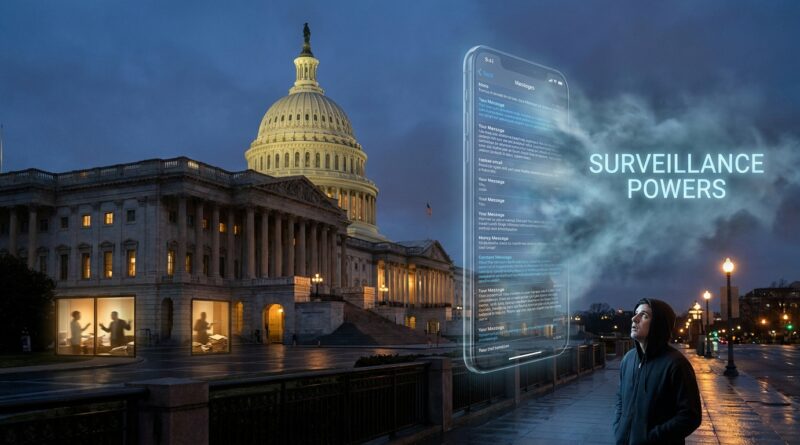
America’s Spy Powers Standoff: What the Eleventh‑Hour Surveillance Deal Really Means For Your Privacy
If your eyes glaze over every time Congress starts arguing about “spy powers,” that is completely fair. The coverage is often all process, no plain English. One side says national security is at risk. The other says your privacy is on the chopping block. Meanwhile, most people are left with the same basic question. Did anything just change for my phone, my messages, or my search history? The short answer is yes, but not in the dramatic all-at-once way the headlines can make it sound. Congress passed a short-term extension that keeps key surveillance tools alive for now. So the government did not lose access overnight, and your privacy did not suddenly get a new shield either. Think of this as a temporary “keep the system running” move while lawmakers keep fighting over whether the rules should be tightened, expanded, or both.
⚡ In a Hurry? Key Takeaways
- The short-term extension means U.S. surveillance authorities stay active for now, so existing spying powers did not shut off.
- For everyday privacy, use encrypted messaging, tighten app permissions, and store less sensitive info in cloud services you do not fully trust.
- This is not just political theater. The rules being debated affect how easily Americans’ communications and related data can be collected or searched.
What just happened?
Congress hit the deadline and, instead of fully settling the surveillance fight, bought itself more time. That is the simplest way to understand it.
The extension keeps major intelligence tools in place while lawmakers argue over changes. Those changes include how much oversight there should be, how broadly the government can collect data, and what protections Americans get when their information is caught up in surveillance aimed at foreign targets.
So if you were hoping the late-night drama meant a big privacy reset, that did not happen. The machinery keeps running.
Why people call these “spy powers”
The phrase sounds dramatic, but it points to something real. These laws let intelligence agencies gather communications and related records for national security purposes. In practice, that can include calls, emails, messages, cloud-stored data, and metadata, depending on the authority being used.
Metadata is the stuff around the message. Who contacted whom. When. For how long. From where. Companies and officials sometimes talk about metadata like it is harmless. It is not harmless. It can reveal a lot about your life, habits, travel, work, relationships, and health concerns.
The part that worries privacy advocates
Even when a program is supposed to target foreigners overseas, Americans’ information can still get swept in. That is the core problem. You may not be the target, but you can still end up in the net if you message, call, email, or share files with someone who is.
Then comes the next fight. What can officials do with that data once they have it?
What the short-term extension means for your privacy
For now, it means continuity, not closure.
These surveillance powers remain available to the government while Congress keeps debating reforms. That matters because any reform that would have limited collection, tightened searches, or added stronger court checks is not fully in effect if it has not passed.
In plain terms, the extension means:
1. Existing surveillance tools keep operating
The government does not have to stop using these authorities just because lawmakers are still arguing. That is the biggest practical outcome.
2. Americans’ data can still be incidentally collected
If surveillance is aimed at a foreign target, your communications can still get caught if you interact with that person or service.
3. Oversight fights are still unresolved
The key question is not only what can be collected, but who gets to search it later, under what rules, and with what approval. Those issues are still being fought over.
4. Your day-to-day risk is more about digital habits than panic
This is important. Most people should not react by thinking the government is reading every text in real time. That is not a useful way to think about it. A better way is this: broad surveillance powers increase the chance that your data, or data about your activity, can be captured, shared, retained, or searched under legal authorities you never personally consented to.
Does this mean the government can read all my texts and emails?
Not exactly. This is where coverage often gets muddy.
No, the extension does not mean every message you send is opened and read by a human being. But yes, it helps keep systems in place that can collect communications and related records under certain rules, especially in foreign intelligence cases.
And here is the uncomfortable part. The line between “targeting foreigners” and “touching Americans’ data” is not as clean as most people assume, because modern communication is global. You might use a U.S. app, a foreign-owned platform, a cloud provider with data centers in several countries, or talk to people abroad without thinking twice.
Why secret courts keep coming up
You have probably heard people mention a secret court and wondered what that even means. They are talking about the Foreign Intelligence Surveillance Court, often called the FISA Court.
It reviews certain government surveillance requests tied to national security. Critics say the process can be too one-sided and too hidden from public view. Supporters say secrecy is necessary when dealing with intelligence operations.
Both things can be true at once. National security cases often need secrecy. But secrecy also makes abuse harder for the public to spot.
What matters to regular people
You do not need to memorize court procedures. What matters is that some surveillance decisions happen in systems that are not as open or as easy to challenge as normal criminal court cases.
Is this all political theater?
Some of it is, yes. Deadline politics is a real thing. Lawmakers know these votes create scary headlines, and both parties use that.
But the substance is not fake. The rules around surveillance shape how easily the government can collect and search communications, how telecom and tech companies must respond, and how much protection Americans get when caught in foreign intelligence programs.
So the shouting is theater. The powers underneath are very real.
What kind of data is most exposed?
If you are trying to think practically, focus on the information that lives in company systems, not just on your device.
Cloud-stored messages and backups
If your messages are end-to-end encrypted but your cloud backup is not, that backup can be a weak spot.
Email is still one of the least private mainstream communication tools. It is useful, but not built for deep privacy by default.
Metadata and account records
This includes login times, IP addresses, contact patterns, device details, and location clues. It sounds boring, but it can be revealing.
Data held by phone carriers and online platforms
Your carrier, social app, cloud provider, and search company may all hold different pieces of your digital trail.
What you can do right now, without going off the grid
You do not need a bunker phone. A few sane steps can make a real difference.
Use encrypted messaging for sensitive conversations
Apps with end-to-end encryption help reduce who can read message content in transit. Just remember that backups, screenshots, and metadata can still matter.
Turn off cloud backups for chats you really want private
Convenience is great until it becomes a copy of your conversations sitting on a server somewhere.
Check app permissions
Many apps grab contacts, location, microphone, camera access, and background activity they do not really need.
Use disappearing messages when appropriate
They are not magic, but they reduce the amount of old chat history hanging around.
Think before using work devices or employer accounts
If it is a work laptop, work email, or work phone, privacy is usually limited. Very limited.
Keep your phone and apps updated
Privacy is not only about surveillance law. It is also about basic security. A hacked phone is a much more immediate risk than most people realize.
What to watch next
The next phase of this fight is about reforms. Watch for three things.
Limits on searches involving Americans
One of the hottest issues is whether agencies should need stronger approval before querying data for information tied to U.S. persons.
Changes to who must assist the government
There has been concern that new wording could pull more service providers or infrastructure companies into surveillance compliance duties.
More transparency, or less
Pay attention to whether lawmakers push for public reporting, outside advocates in surveillance court matters, or tighter reporting on how often Americans’ data is touched.
So, should you be worried?
Concerned is the better word.
You do not need to live in fear. But you also should not shrug this off as meaningless Beltway noise. The US spy powers extension what it means for privacy question comes down to this: the government kept its current tools, while the arguments over stronger privacy guardrails are still unresolved.
That means this is a good moment to clean up your own digital habits instead of waiting for Congress to sort it out for you.
At a Glance: Comparison
| Feature/Aspect | Details | Verdict |
|---|---|---|
| Current surveillance powers | Short-term extension keeps existing national security surveillance authorities active while Congress debates reforms. | No immediate privacy reset. |
| Impact on everyday Americans | Americans’ communications and metadata can still be incidentally collected in programs aimed at foreign targets. | Risk remains real, even if indirect. |
| Best personal response | Use encrypted apps, reduce cloud backups, review permissions, and keep less sensitive data in third-party systems. | Practical steps help more than panic. |
Conclusion
This round ended with a pause button, not a final answer. Today’s short-term extension of U.S. surveillance authorities keeps powerful spying tools running while Congress fights over reforms, which directly affects how easily the government can sweep up Americans’ data in the name of national security. The good news is that you do not need to be a lawyer or privacy activist to respond smartly. If you understand the basics, use more private tools, and cut down the amount of data companies hold about you, you are already in a better position. The political fight is still unfolding. Your privacy choices do not have to wait.