Artemis II’s Quiet Return: How a Moon Flyby Mission Just Changed America’s Future on Earth
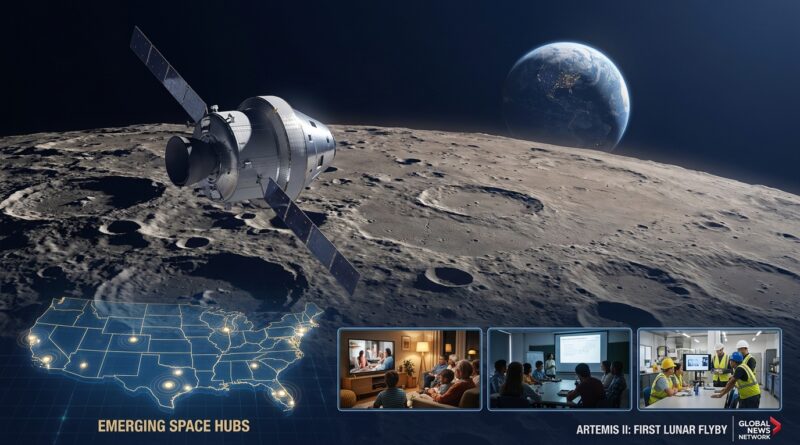
You are not wrong to roll your eyes at another big space headline. Most coverage of Artemis II stops at the cool part, four astronauts looping around the Moon, and skips the part that hits home. Who gets the jobs? Which cities get the contracts? Will your kid’s school suddenly start pushing aerospace and robotics? Will your taxes help fund something useful, or just another expensive national trophy? Those are fair questions. Artemis II matters because it is not really about a single Moon flyby. It is a signal that the U.S. government, defense world, universities, and private industry are lining up for a long spending cycle that could shape hiring, research grants, factory work, real estate, and local economies for the next decade. The mission may look quiet from a distance, but back on Earth it is already moving money, talent, and political attention in a very loud way.
⚡ In a Hurry? Key Takeaways
- Artemis II is a Moon mission, but its real impact is on Earth through jobs, contracts, college programs, and defense spending.
- If you live near aerospace hubs or have kids choosing careers, watch local universities, suppliers, and apprenticeship programs tied to space and advanced manufacturing.
- The benefits will not be spread evenly. Some regions will gain faster, while taxpayers everywhere help cover the bill.
Why this Moon mission feels distant, but is not
On paper, Artemis II is simple. NASA sends astronauts around the Moon and brings them home. No lunar landing this time. No flags in the dust. That is exactly why many people miss the bigger point.
A crewed flyby is a confidence test. It tells Congress, investors, contractors, and America’s allies that the Artemis program is real enough to keep funding. Once that happens, money tends to follow in waves. First the obvious NASA spending. Then the supplier contracts. Then the university grants. Then the local business growth around all of it.
If you read America’s First Return to Deep Space Since Apollo Just Launched. Why Artemis II Actually Matters for Life Back on Earth, the key idea is the same. Space missions rarely stay in space. They spill into daily life through manufacturing, software, materials science, communications, and defense.
What Artemis II could mean for jobs
Not just astronaut jobs
Very few Americans will ever work inside a spaceship. That is not where the big employment effect is. The real hiring happens in the long chain behind the mission.
Think engineers, yes. But also welders, machinists, electricians, logistics planners, safety inspectors, software developers, cybersecurity analysts, lab techs, construction crews, and administrative staff. Big missions need heat shields, sensors, batteries, guidance systems, life-support parts, testing equipment, and endless layers of compliance paperwork.
Where the hiring is likely to cluster
The Artemis II mission impact on American economy and jobs will likely be strongest in places that already have space and defense roots. That includes parts of Texas, Alabama, Florida, Colorado, California, Louisiana, Mississippi, and pockets of the Midwest with advanced manufacturing capacity.
That does not mean every town wins. It means regions with the right suppliers, research schools, and transport links can pull ahead faster. If a city lands a major contract or becomes a specialist hub for propulsion, robotics, or composite materials, local wages and housing pressure can rise with it.
Good news and bad news
The good news is that space-related jobs often pay above average and create secondary work nearby. The bad news is that these jobs usually require either technical training or access to the right employers. That can leave rural communities and struggling regions watching from the sidelines unless state leaders move quickly.
How this affects your kids’ education
Artemis II will almost certainly push more schools and colleges to market STEM programs. You will hear more about aerospace, AI, robotics, satellite systems, advanced materials, and data science. Some of that is genuine opportunity. Some of it is branding.
For families, the practical question is not, “Should my child become an astronaut?” It is, “Which skills tied to this spending cycle are likely to stay useful even if one mission gets delayed?”
Usually, the safer bets are broad technical skills. Computer science. Electrical work. Manufacturing automation. Materials testing. Cybersecurity. Systems engineering. Project management. These can move between aerospace, defense, energy, transport, and healthcare tech.
What parents should watch for
Look at what your local community college and state university are adding. New lab spaces, partnerships with NASA contractors, drone programs, semiconductor training, and apprenticeship tracks often appear before the headlines catch up.
If your area starts talking about “workforce pipelines,” pay attention. That phrase may sound dry, but it often means public money is about to flow into training programs and employer partnerships.
Where the taxpayer money goes
This is where people get skeptical, and honestly, they should. Artemis is expensive. Space spending rarely stops at the sticker price. A mission creates years of follow-on costs, from launch systems to support infrastructure to security to research grants.
Supporters argue that these dollars come back through jobs, innovation, national prestige, and technologies that end up helping other industries. Critics argue that government programs can become bloated, politically protected, and slow to deliver clear value to ordinary families.
Both points can be true at once.
Artemis II is best understood as a trigger. It gives political cover for more spending in cislunar space, which is the region between Earth and the Moon. That means NASA money, defense money, private capital, and international partnerships all have a stronger reason to stay in motion.
The part most people are missing: defense and surveillance
Space policy is never only about science. Once the U.S. treats cislunar space as strategically important, military planners do too. That can mean better tracking systems, stronger communications networks, more autonomous navigation, and more investment in space domain awareness.
Translated into plain English, Artemis II helps make near-Moon space a place the U.S. expects to work in, protect, and monitor. That brings in defense contractors and intelligence interests, not just NASA.
For the economy, that matters. Defense-linked spending is often steadier than commercial hype. It can support long-term hiring in software, imaging, sensors, AI, cybersecurity, and secure communications. It also means more public debate is needed, because surveillance tools built for one purpose often expand into others over time.
Will this raise prices in some places?
Possibly, yes. Not nationwide in some dramatic overnight way. But locally, aerospace growth can put pressure on housing, office space, and infrastructure.
When well-paid workers move into a region faster than homes are built, prices rise. We have seen this pattern around tech and defense hubs before. A new cluster of engineers and suppliers can be great for local tax revenue and painful for renters.
That is why Artemis II is not just a science story. It can become a planning story for mayors, school districts, transit agencies, and builders. Cities that welcome the contracts without planning for housing and roads may end up with growth headaches.
Who is most likely to gain, and who may be left out
Likely winners
Large contractors, specialized suppliers, university research centers, and metro areas already plugged into aerospace and defense are in the best position. Students with access to strong technical training also stand to gain.
Possible losers
Taxpayers in regions with little chance of landing contracts may feel like they are helping fund growth elsewhere. Workers without access to retraining can also miss out if local economies do not connect to the new spending. Small towns may see little direct benefit unless they are near a manufacturing or testing corridor.
The middle ground
Some places can still benefit if they move smartly. Community colleges, supplier networks, and public-private training deals can pull a region into the orbit of space spending even without a giant NASA center nearby.
What regular readers should do with this information
You do not need to memorize rocket specs. You need to watch where the money goes.
If you are a worker, look for nearby aerospace suppliers, defense manufacturers, and research labs. If you are a parent, watch for scholarships, robotics grants, and technical certificate programs. If you are a homeowner or renter in a fast-growing aerospace region, keep an eye on zoning fights, new apartment construction, and infrastructure plans. Those may affect your monthly costs more than the Moon mission itself.
If you invest, this is a reminder that the space economy is not just launch companies and flashy startups. It includes boring but important businesses that make components, software, testing tools, and secure systems. Those often outlast the hype.
At a Glance: Comparison
| Feature/Aspect | Details | Verdict |
|---|---|---|
| Job creation | Most gains will come through suppliers, manufacturing, software, research, and defense support, not astronaut roles. | Real opportunity, but unevenly shared. |
| Education impact | Expect more STEM programs, grants, and workforce training tied to aerospace, AI, robotics, and materials science. | Good for students with access to solid training. |
| Taxpayer value | Spending can support innovation and regional growth, but it also carries cost overruns, political favoritism, and local inflation risks. | Worth watching closely, not blindly cheering. |
Conclusion
Artemis II may look like a brief trip around the Moon, but its effects on Earth could last for years. This is not just a feel-good “America is back in space” moment. It is a starting gun for long-term federal and private spending on contracts, STEM pipelines, AI, materials research, and new military and surveillance systems tied to cislunar space. Once you look past the launch photos, the real story becomes clearer. Some regions will gain jobs and investment. Some families will find new school and career paths. Some communities will face higher housing pressure and rising competition for resources. And taxpayers everywhere will help carry the cost. That is why this story matters now. If you understand where the money, training, and political attention are heading, you can spot the real-world effects before they show up in your paycheck, your child’s course catalog, or your neighborhood housing market.