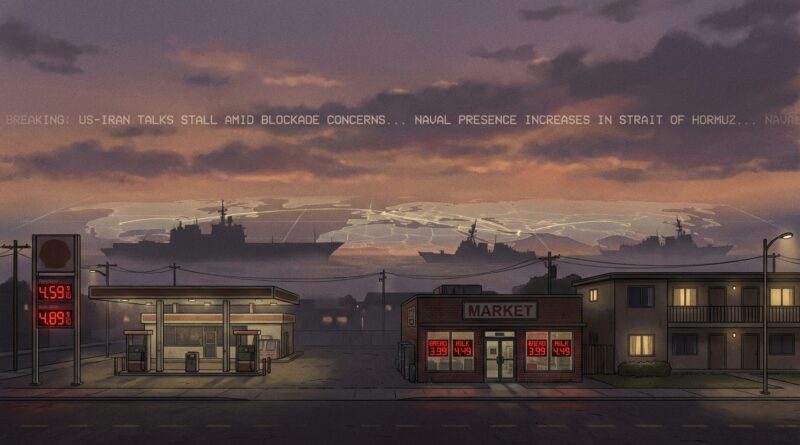
From Distant Talks to Your Town’s Grocery Aisle: How the New US–Iran Standoff Could Quietly Jack Up Your Food and Rent
You are not imagining it. Every time headlines start talking about failed talks with Iran, a US blockade, tanker routes, or “regional escalation,” regular people get stuck with the bill later. That is the part news reports often skip. They tell you markets are nervous, but not what that means when you are standing in the grocery aisle or opening a rent renewal email. If this standoff gets worse, the most likely hit to Americans is not some dramatic overnight collapse. It is a slower squeeze. Gas prices can move first. Shipping costs often follow. Then food, household basics, and in many cities, rent pressure can rise as higher transport and utility costs work their way through the system. If you want the plain-English version of how US Iran blockade will affect prices in America, think of it like this. When energy gets more expensive, a lot of everyday life gets more expensive right behind it.
⚡ In a Hurry? Key Takeaways
- A worse US-Iran standoff would most likely raise gas first, then shipping, groceries, and some rent-related costs after that.
- If your budget is tight, lock in what you can now. Refill pantry staples slowly, watch your lease date, and expect fuel and delivery costs to change before store shelves do.
- This is usually a squeeze, not a snap. You often get a short warning window of a few days to a few weeks before the pain shows up in everyday bills.
Why a faraway conflict can hit your wallet at home
It feels unfair because it is. A military standoff near Iran sounds like foreign policy. Your grocery receipt and rent check feel local. But the bridge between them is energy, shipping, insurance, and business fear.
Iran sits near one of the world’s most important oil shipping chokepoints, the Strait of Hormuz. A big share of global oil and gas flows through that area. If the US-Iran crisis worsens, even without full war, traders start betting that oil shipments could be delayed, attacked, or made more expensive to insure.
That alone can push oil prices up. Companies do not wait for disaster to happen. They raise prices when they think risk is rising.
The chain reaction, in normal-person terms
Step 1: Oil jumps
Crude oil is the starting point. If markets think tankers might be blocked, rerouted, or hit with higher insurance costs, crude prices can climb fast. Sometimes this happens within hours or days.
Step 2: Gas stations react
Gas prices are one of the first things families notice. Not every station changes prices at the same speed, but fuel often reacts faster than groceries or rent. If the crisis deepens, your commute can get more expensive before the rest of your budget catches up.
Step 3: Shipping gets pricier
Trucks, ships, warehouses, farm equipment, and delivery networks all depend on fuel. So even if your food was grown in America, it still has to be planted, harvested, packed, cooled, shipped, and stocked. Higher energy costs spread through every step.
Step 4: Grocery stores pass on more costs
This is where families really feel it. Stores do not raise every price at once. Usually you see pressure first on items with heavy transport, refrigeration, fertilizer, or packaging costs. Think meat, dairy, frozen foods, imported produce, snacks, bottled drinks, and anything delivered often.
Step 5: Rent pressure can show up later
A blockade does not directly raise rent overnight. But it can push up utility costs, maintenance costs, building insurance, transport costs for repairs, and the overall inflation picture. Landlords and property managers notice all of that. In already tight rental markets, lease renewals may come in higher partly because the whole cost of running property has gone up.
So how fast could this show up?
That depends on how serious the standoff gets, but here is the rough timeline people should watch.
Within 24 to 72 hours
Oil markets react. Financial news gets louder. Gas futures move. You may not see the full effect yet, but the signal starts here.
Within a few days to two weeks
Gas stations begin adjusting. Airlines may talk about fuel costs. Delivery surcharges and shipping warnings can start popping up. Some wholesalers quietly raise prices before retail stores do.
Within two to six weeks
Grocery inflation can become more visible, especially on products that move through long supply chains. Restaurants may trim specials or bump menu prices. Online orders may include higher shipping charges.
Within one to three months
If high energy costs stick around, broader inflation pressure can start showing up in rent renewals, utility bills, service fees, and monthly household budgeting.
What gets more expensive first
If you are trying to plan ahead, these are the categories I would watch most closely.
Gasoline
This is the fastest and most visible warning sign. If crude rises sharply, gas usually follows.
Groceries with lots of transport or cooling
Milk, eggs, meat, frozen meals, seafood, produce shipped long distances, and name-brand packaged goods often feel the hit sooner than dry pantry basics.
Household delivery costs
Furniture, appliances, online orders, and anything bulky can get more expensive because freight costs rise.
Utilities
Depending on region and fuel mix, households may see pressure on electricity or heating bills, especially if energy markets stay jumpy.
Rent and housing-related fees
This usually comes later. Think renewals, maintenance pass-throughs, parking, trash, and other property charges that rise when operating costs rise.
What probably will not happen right away
It is also important not to panic-buy based on worst-case TV chatter.
You probably will not wake up tomorrow to empty shelves everywhere because of one headline. A US-Iran blockade story is more likely to act like a price booster than a direct shortage trigger for most Americans, at least at first. The bigger risk for many households is the quiet squeeze. Ten dollars more here. Fifteen there. Then a pricier tank of gas. Then a rent renewal that feels just a little worse than expected.
How US Iran blockade will affect prices in America, item by item
Here is the simple version people actually need.
At the pump
Expect the quickest effect here. If the standoff grows, gas prices are the best early warning light for your wider budget.
At the grocery store
Imported goods and fuel-heavy products usually move first, but local food is not protected. Farming, processing, and trucking all cost more when energy costs rise.
For rent
The effect is indirect, but real. Landlords face higher costs. If your lease is up soon, this matters more than if you just renewed.
For interest rates and borrowing
If energy-driven inflation gets bad enough, it can complicate rate cuts and keep borrowing expensive. That affects car loans, credit cards, and mortgages too.
What to do now, before it shows up on your receipt
You do not need a bunker. You need a plan.
1. Watch gas, not just cable news
If you want the fastest practical signal, track local gas prices for a week. Sharp fuel moves often tell you more about near-term household pain than vague market talk.
2. Refill the basics gradually
If your pantry is low, this is a good time to restock a little. Rice, beans, pasta, oats, canned tomatoes, cooking oil, frozen vegetables, and shelf-stable basics are usually smarter than panic-buying expensive extras.
3. Buy flexible groceries
Pick foods you know your family will use no matter what. The goal is not hoarding. It is giving yourself breathing room if prices jump for a few weeks.
4. Check your lease date now
If renewal season is close, do not wait until the last minute. Ask early about renewal terms. In some places, renewing sooner or negotiating a longer term can protect you from a later jump.
5. Build a tiny fuel buffer in your budget
Even an extra $10 to $20 a week set aside for transportation can help if prices climb suddenly. Small cushions matter when everything else is already tight.
6. Delay large delivered purchases if the timing is flexible
If you were on the fence about ordering a bulky item with shipping fees, keep an eye on freight costs. Some categories get noticeably more expensive when fuel spikes.
7. Be extra careful with variable expenses
This is a good month to review subscriptions, takeout spending, and impulse buys. The point is not guilt. It is making room before higher essentials crowd out your choices.
What to watch in the headlines without needing an economics degree
You do not need to become a geopolitical analyst. Just keep an eye on these plain signs:
- Reports of shipping disruption near the Strait of Hormuz
- Sudden jumps in crude oil prices
- Warnings from shipping or insurance firms
- Rapid local gas price increases over several days
- Airlines, trucking firms, or retailers talking about fuel surcharges
If several of those start happening at once, the squeeze is no longer theoretical.
Who gets hit the hardest
Lower-income families usually feel this first because gas and groceries already take a bigger share of their income. Renters are also exposed because they have less control over housing costs. Rural households can get squeezed faster too, simply because driving is not optional in many places.
That is why plain talk matters here. This is not just about “markets.” It is about whether your paycheck still stretches to Friday.
At a Glance: Comparison
| Feature/Aspect | Details | Verdict |
|---|---|---|
| First price impact | Gas and fuel usually move before groceries and rent | Watch the pump first |
| Grocery effect | Higher transport, cooling, fertilizer, and packaging costs can raise food prices over days to weeks | Likely if oil stays high |
| Rent effect | Usually indirect and slower, through utilities, maintenance, insurance, and wider inflation pressure | More of a next-renewal problem than a next-week problem |
Conclusion
The big thing to remember is this. A US-Iran crisis does not stay “over there” when oil, shipping, and business costs start moving. It can quietly become higher prices here, first at the pump, then in the grocery aisle, and later in housing costs that were already hard enough. This helps the community today because the US–Iran crisis just moved from abstract geopolitics into a hard economic squeeze, and most Americans will only realize it when prices quietly spike and leases renew higher. If you understand the path from blockade headline to mailbox bill now, you have a better shot at adjusting early instead of getting blindsided next month.