America’s AI Blackout Risk: How the New Energy Crunch Could Quietly Hit Your Power, Your Bills and Your Job
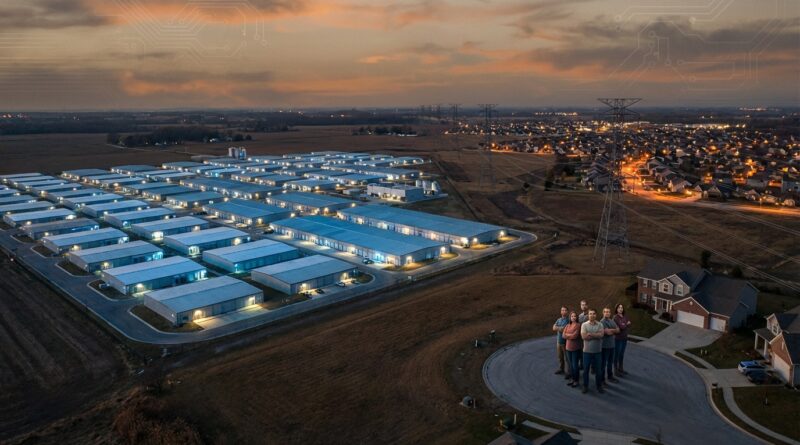
You are not imagining it. Power bills are rising, summer outages feel more nerve-racking, and suddenly there is a giant new “data center campus” proposed outside town. A lot of that anxiety is tied to the same thing filling your news feed every day: AI. The part many people are not being told clearly is that AI systems need huge amounts of electricity, and the buildout is happening fast. Utilities, tech companies and local officials often frame this as jobs and progress. Sometimes it is. But communities can also end up with more strain on the grid, more pressure to build power plants and transmission lines, and higher long-term costs that ordinary customers may help cover. This is the AI data center energy crisis in the United States in plain English. It is not just a Silicon Valley story. It is becoming a neighborhood story, a monthly-bill story, and in some places, a lights-stay-on-during-a-heat-wave story.
⚡ In a Hurry? Key Takeaways
- AI data centers are pushing electricity demand up in parts of the U.S., which can mean grid stress, expensive upgrades and pressure on customer bills.
- Ask your utility and local officials who pays for new power lines, substations and backup generation before a data center project is approved.
- “Clean” and “job creating” promises do not always match the local reality, so residents need the numbers, not just the press release.
Why this suddenly matters to regular people
For years, data centers were easy to ignore. They sounded like bland warehouse buildings full of servers, tucked away in industrial parks. Now AI has changed the scale of the problem.
Training and running large AI models takes serious computing power. Serious computing power takes serious electricity. Not a little more. A lot more. That means utilities across the country are now planning for demand growth they did not expect to hit this quickly.
If you are a homeowner, renter or small business owner, you care for three simple reasons. First, your electric bill can go up. Second, your local grid can get tighter during peak demand. Third, the economic benefits may not be as big as promised, especially once construction ends.
What an AI data center actually does to the grid
Think of the grid like a highway system. It works when traffic is heavy but manageable. A giant AI data center is like adding a stadium, airport and shipping hub all at once near one exit. You do not just need a bigger parking lot. You need stronger roads, better traffic control and more fuel coming in.
Huge round-the-clock demand
Many industrial sites use lots of power during certain hours. AI-focused data centers often want enormous amounts of power all day and all night. That is harder on the grid because there is less breathing room.
New substations, lines and generation
When a data center project is announced, the public often hears about the building. The bigger story is the infrastructure around it. Utilities may need new substations, transmission upgrades, gas peaker plants, batteries or contracts for more generation. Those costs do not vanish. They land somewhere.
Water can become part of the fight too
Many data centers use water for cooling. In some areas, especially drought-prone regions, that raises another local question: are we trading one strained resource for another?
Why your electric bill could get dragged into it
This is the part that makes people angry, and fairly so. A tech company can promise investment, but the local utility structure decides who actually carries the financial risk.
Sometimes big customers pay for a good share of the upgrades needed to serve them. Sometimes the cost is spread more widely through rates over time. Sometimes regulators approve deals with discounted power or favorable terms because they want economic development. That can sound reasonable until regular customers realize they are subsidizing growth they never asked for.
The key question is not “Is this project exciting?” The key question is “Who pays?”
Ask specifically about:
- Transmission and distribution upgrades
- New generation or backup power contracts
- Tax incentives and abatements
- Special utility rates for large-load customers
- What happens if the company’s demand forecasts are wrong
The jobs promise versus the reality
Data centers do create jobs. During construction, they can create a lot. But once the building is up and running, permanent staffing is often much smaller than people expect.
That does not mean the jobs are fake. It means the public should compare the real long-term employment numbers with the long-term public cost. If a project uses huge amounts of power, receives tax breaks and changes local land use, the community should know whether it is getting dozens of jobs, hundreds of jobs or mostly a press conference.
Why officials keep saying yes
There are understandable reasons local and state leaders say yes to these projects. Nobody wants to look anti-business. Tech investment sounds future-proof. And after years of worrying about factories leaving town, a massive new campus can look like a win.
But local governments are often negotiating with companies that have teams of lawyers, energy analysts and public relations staff. Residents may get a public hearing after most of the important choices are already on paper.
That is why early questions matter more than late outrage.
What the AI data center energy crisis in the United States looks like on the ground
This is not one national emergency with one switch to flip. It is a patchwork problem.
In fast-growth regions
States with cheap land, business-friendly policy and existing fiber networks are seeing clusters of data center proposals. Once one project lands, more often follow. That can multiply demand faster than local planning was built for.
In places with older grids
Older infrastructure may already be under pressure from heat waves, population growth and electrification. Add a giant new load, and the margin for error shrinks.
In areas selling “clean power” narratives
Some projects are marketed as being powered by renewable energy. That can be partly true, but the local reality still matters. If a data center signs a renewable contract on paper while the regional grid still needs fossil generation during peak hours, residents should understand the difference between annual accounting and real-time local impact.
Questions your utility should answer clearly
If you attend a public meeting, write your state regulator or talk to local officials, keep the questions plain and direct.
- How much electricity will this project use at full buildout?
- Is that figure for one building, one campus or the entire planned expansion?
- What grid upgrades are required, and what is the price tag?
- Who pays those costs if the project grows more than expected?
- Will residential customers see higher rates because of this?
- Will reliability worsen during heat waves or winter storms?
- What backup generation is being added, and is it gas, diesel, battery or something else?
- How much water will the site use?
- How many permanent jobs will exist after construction ends?
- What tax breaks or incentives are being offered?
If officials cannot answer these in plain English, that is a warning sign by itself.
Red flags to watch for in company announcements
“100% renewable” with no local detail
That phrase can mean a lot of things. Ask whether the power is locally available when demand peaks, or whether the claim is based on offset-style accounting over time.
Big investment numbers, tiny job numbers
A billion-dollar project sounds huge. It is huge. But that does not automatically mean huge local employment.
“No impact on ratepayers” without regulatory backing
If that promise is made, ask where it is written, who approved it and what happens if infrastructure costs rise later.
Phased buildouts
A project may begin at one size and quietly scale up. Always ask for the full potential buildout, not just phase one.
What residents can actually do before decisions are locked in
This is the useful part. You do not need an engineering degree to push for better answers.
1. Show up early, not late
Most people hear about a project when bulldozers feel inevitable. Try to get involved when zoning changes, utility planning documents or state regulatory filings first appear.
2. Read the boring documents
Integrated resource plans, utility rate cases, planning commission agendas and economic development board notes are where the real story often lives. They are dull. They are also gold.
3. Ask for numbers, not adjectives
“Transformational.” “Sustainable.” “Innovative.” Nice words. Ask for megawatts, water use, tax incentives, permanent jobs and customer bill impact.
4. Team up with unlikely allies
Environmental groups, consumer advocates, neighborhood associations, farmers and small business groups may all care for different reasons. Together, they can ask harder questions than one person alone.
5. Pay attention to your state utility regulator
Public utility commissions often matter more than city hall in these cases. That is where cost recovery, rate design and infrastructure approval can really take shape.
What a fairer approach would look like
None of this means every data center is bad or that AI should be banned. It means the rules should match the scale of the impact.
A fairer model would include:
- Transparent power-demand estimates
- Binding agreements on who pays for upgrades
- Stronger local input before approvals
- Real disclosure of water use and backup power plans
- Honest job numbers after construction
- Reliability planning that protects existing customers first
That is not anti-tech. It is basic accountability.
What happens next
The AI boom is not slowing down because communities ask tough questions. But the shape of the boom can still change. Regulators can require big customers to shoulder more of the cost. Cities and counties can demand clearer disclosures. State leaders can stop treating every data center proposal like free money falling from the sky.
The worst outcome is sleepwalking into a decade of higher bills and weaker local leverage because the story sounded too technical to follow. It is not too technical. It is about electricity, land, water and who gets a say.
At a Glance: Comparison
| Feature/Aspect | Details | Verdict |
|---|---|---|
| Electricity demand | AI data centers can require very large, steady power loads that force utilities to expand substations, lines and generation. | High local impact. Ask for actual megawatt numbers. |
| Customer bills | Costs may be assigned to the company, spread through rates, or buried in future utility cases depending on regulation. | Do not assume the tech company pays for everything. |
| Local benefits | Construction can be significant, but permanent job counts may be modest compared with the power and land footprint. | Compare long-term public cost with long-term local gain. |
Conclusion
The AI energy crunch is no longer some abstract future problem. It is becoming a practical, local issue that can affect whether the lights stay on in extreme weather, how much you pay for electricity over the next decade and what kind of industrial development lands near your home. The good news is that communities are not powerless here. When residents ask early, specific questions about grid upgrades, water use, ratepayer risk and real job numbers, the conversation gets harder to spin. That is the value of seeing the AI data center energy crisis in the United States clearly. Once you cut through the jargon and the glossy promises, you can push for smarter decisions before the contracts, rate plans and zoning changes are locked in. And that is when your voice matters most.