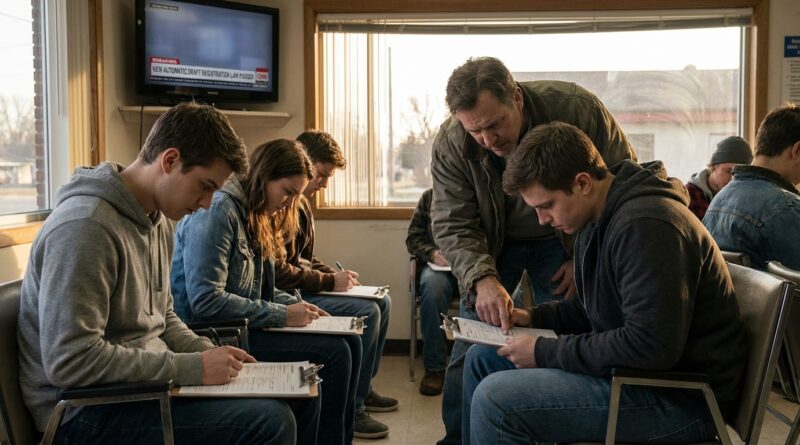
The New Draft Debate: How Automatic Registration Just Quietly Put Millions of Young Americans on Notice
If you are a parent, or you are in your late teens or twenties yourself, the recent headlines about an automatic draft registration law in the United States can feel like a punch out of nowhere. A lot of people are reading scary posts and wondering if their son just got signed up for military service without knowing it. That anxiety is real. The good news is that the story is getting flattened online. What is being discussed is automatic registration for the Selective Service, not an active military draft. Those are not the same thing. Still, this matters. If Congress changes the rules, millions of young men could be registered automatically instead of having to sign up on their own at age 18. That could affect routine life paperwork, from DMV visits to federal forms, and it could raise real questions for immigrant families trying to understand what registration means and what it does not mean.
⚡ In a Hurry? Key Takeaways
- No, this does not mean the U.S. has started a draft. It means the government may automatically register eligible young men with Selective Service instead of making them do it themselves.
- If you have an 18-year-old son, check his Selective Service status and keep personal records up to date, especially address and immigration information.
- Most panic online comes from mixing up registration with induction. Registration is a database step. A real draft would still need separate action.
What is actually being proposed?
The phrase people keep searching is “automatic draft registration law United States,” but that wording can be misleading. The law being discussed would not automatically send people into military service. It would automatically register eligible young men for the Selective Service System.
Right now, most men in the United States are required to register with Selective Service within 30 days of turning 18. That includes U.S. citizens and many male immigrants living in the country. Under an automatic system, the government would use existing federal records to do that registration for them.
So the practical change is this. Instead of your teenager having to remember to sign up, the government may do it using data it already has.
Why are people upset if this is “just paperwork”?
Because paperwork is never really just paperwork when it involves your child and the military.
Families hear the words “draft” and “automatic” together, and they picture doors getting kicked in or kids getting shipped off with no warning. That is not what this proposal does. But the concern is still understandable. Automatic registration removes one more visible moment where a young man and his family realize, “Wait, this system applies to us.”
That matters. The current process at least forces some awareness. An automatic system could make registration more efficient while also making it easier for people to be included without ever having a real conversation about what Selective Service is.
Registration and a draft are not the same thing
Selective Service is a list
Selective Service is basically a federal database of people who could be called if Congress and the president ever decided to activate a draft during a national emergency.
A draft would be a separate event
For an actual draft to happen, the U.S. government would have to take additional major steps. Registration alone does not trigger military service.
Think of it like this. Automatic registration is adding a name to a file cabinet. A draft would be the government opening that cabinet and starting a new process. We are not at that second step.
Who would this touch?
If an automatic registration law in the United States takes effect, it would mostly affect young men around age 18 who are already required under current law to register.
That usually includes:
- U.S. citizen men ages 18 to 25
- Many immigrant men living in the United States, including some permanent residents, refugees, asylees, and undocumented immigrants
- Young men who might not even realize the rule applies to them
It generally does not mean women are suddenly being added under the current proposal unless Congress separately changes eligibility rules. That part often gets lost in social media posts.
Could your kid be “swept up” without signing anything?
Possibly, yes, in the narrow sense of registration. That is the whole point of automatic registration. A young man who would have been required to register himself could instead be registered through government records.
But here is the part to keep clear. Being automatically registered is not the same as being drafted into service.
Your son would not skip straight from a DMV record or federal database into basic training. There are legal and political steps between those two things. Big ones.
Why the DMV, FAFSA, and other paperwork keep coming up
This is where the story gets less abstract.
For years, Selective Service registration has already been tied in various ways to everyday systems. Some states connect registration to driver’s license applications. Some federal aid and benefit rules have also crossed paths with Selective Service over time, though those rules have changed in important ways.
That is why parents are noticing this now. It is not just about the military. It is about how government databases talk to each other.
If the United States moves to an automatic draft registration law, the practical effect could be less visible paperwork for some families, but also less awareness that registration happened at all.
What immigrant families should know
This is one of the biggest points of confusion.
Many immigrant families assume Selective Service only applies to citizens. That is not true. Depending on immigration status, some non-citizen men are also required to register.
That can feel especially stressful if your family has spent years trying to avoid mistakes on government forms. In some households, anything involving federal records sets off alarm bells. Fair enough.
But avoiding the topic can create more trouble than facing it. If registration is required and missed, that can cause headaches later. Historically, missed registration has affected access to some federal benefits and has come up in citizenship-related situations, especially when someone needs to explain why they failed to register when required.
If your family is in this bucket, this is a smart time to talk with a qualified immigration attorney or legal aid group, not just a cousin in the group chat.
Why this debate is happening now
Supporters say automatic registration makes sense because the current system is uneven. Some young men register on time. Others forget, never hear about it, or do not understand the rule. That creates a messy system with patchy compliance.
Critics say if the government is going to keep Selective Service at all, the public deserves a much bigger debate before names are quietly pulled in through data matching.
And that is really the heart of it. This is partly an efficiency argument. It is also a trust argument.
What families should do right now
1. Do not panic over the word “draft”
Most of the scary posts online blur together registration and actual conscription. Keep those separate in your mind.
2. Check current registration rules
If you have a son who is 18 or turning 18 soon, check whether he is already required to register under current law. In many cases, he is.
3. Confirm status directly
Use the official Selective Service website, not a social media screenshot, to verify whether someone is registered.
4. Keep records updated
Save copies of important documents. Keep addresses current. If immigration status is part of the picture, keep a clean paper trail.
5. Have the awkward conversation
This is one of those topics teenagers tune out until it bites them later. A ten-minute talk now can prevent confusion down the road.
What this does not mean
- It does not mean the United States has restarted the draft.
- It does not mean every young person is now eligible.
- It does not mean a person can be secretly shipped into military service because a database matched their name.
- It does not erase the need for Congress and the president to take separate action if a real draft were ever considered.
The bigger issue hiding underneath
This story is really about something Americans keep running into. Government systems become more automatic, and people find out after the fact that a rule they barely understood was already attached to them.
That is why this story feels bigger than it looks. It is not just military policy. It is another example of how back-end government data decisions can suddenly land in family life.
One day it sounds like a distant Washington topic. The next day it is your 18-year-old at the kitchen table asking, “Wait, am I on some list?”
At a Glance: Comparison
| Feature/Aspect | Details | Verdict |
|---|---|---|
| Automatic registration | Government would register eligible young men with Selective Service using existing records instead of relying on them to sign up themselves. | Real policy shift, but still an administrative one. |
| Actual military draft | Would require separate national action beyond registration, including political and legal steps. | Not the same thing, and not currently what these headlines mean. |
| Impact on families | Could affect awareness around DMV records, federal forms, and compliance questions for citizens and some immigrants. | Worth paying attention to now, before rumors outrun facts. |
Conclusion
An automatic draft registration law in the United States sounds abstract until you picture the real-world version of it. Your teenager gets a license. Files a form. Turns 18. And suddenly a system you barely thought about becomes personal. That does not mean a draft has begun, and it does not mean your child is about to be pulled into military service without warning. But it does mean families should understand the difference between registration and induction, and know how current rules may already apply. A calm, informed conversation now is worth a lot more than a panicked late-night scroll through bad posts. The more clearly you understand this, the less room fear and misinformation have to take over.