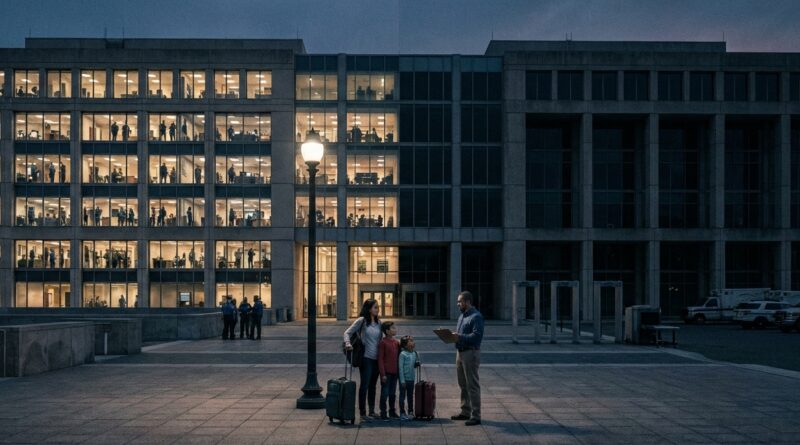
The Hidden Shutdown: How a DHS Stalemate Is Quietly Reshaping Everyday American Security
You are not wrong to feel confused. Most shutdown coverage treats this like another Washington food fight, while regular people are left wondering whether the airport is safe, whether FEMA will show up after a storm, and whether the border is being watched or just talked about. That gap matters. A record-long Department of Homeland Security funding stalemate does not usually mean everything stops at once. It means the system starts running tired. Essential workers still report. Many do it without pay. Training gets delayed. hiring freezes bite harder. Tech upgrades stall. Backup plans get thinner. For families and small businesses, the real issue is not instant collapse. It is a slow drop in margin for error. If a hurricane hits, if cyber threats rise, or if travel spikes, there is less slack in the system. Here is the plain-English version of what is still working, what is slipping, and what you can do now.
⚡ In a Hurry? Key Takeaways
- The Homeland Security shutdown impact on everyday Americans in 2026 is mostly about slower response, thinner staffing, and more risk during travel, storms, and cyber incidents, not an immediate total shutdown.
- Build a small backup plan now. Leave extra airport time, keep emergency supplies updated, and make sure your business has offline copies of key records and contact lists.
- Core security functions usually continue, but long funding gaps wear people down and make mistakes, delays, and uneven service more likely.
What a Homeland Security shutdown actually means
The Department of Homeland Security is a big mix of agencies. It includes TSA, FEMA, Customs and Border Protection, Coast Guard, Secret Service, Cybersecurity and Infrastructure Security Agency, and more. During a shutdown, many of these workers are labeled “essential” and keep working.
That sounds reassuring. It is, up to a point.
But “still working” is not the same as “working normally.” If people are reporting without pay, support staff are furloughed, contracts are delayed, and routine upgrades are paused, the system keeps moving with less cushion. Think of it like driving on worn tires in the rain. The car still runs. The margin for error gets smaller.
What is likely still working for most Americans
Airport screening
TSA checkpoints usually stay open during a shutdown because screeners are considered essential. So yes, you can still fly. Bags are still scanned. ID checks still happen.
The catch is staffing strain. Over time, unpaid work can lead to more callouts, lower morale, and longer lines at busy airports. Travelers often feel the effect first as delays, inconsistent wait times, and less flexibility when something goes wrong.
Border and port operations
Border Patrol agents and customs officers typically remain on duty. Cargo still moves. Ports still operate. Entry checks do not simply disappear.
Still, when support systems are stretched, inspections can slow down, overtime can rise, and the workload gets heavier on fewer shoulders. That can affect shipping timelines, cross-border business, and traveler processing.
Emergency alerts and core disaster response
Basic warning systems and urgent disaster functions generally continue. If a storm is heading your way, weather alerts still matter and local emergency management still plays a major role.
But federal surge capacity can become harder to manage if the shutdown drags on. Planning, coordination, training, and recovery paperwork do not always stop in a dramatic way. They just get messier and slower.
Where families may feel the strain first
Air travel stress
If you have a trip coming up, the most realistic risk is not “no security at the airport.” It is a more tired system. Give yourself extra time. Watch your airline app. Check TSA wait times before leaving. If you are traveling with kids, medicine, or tight connections, pack for delays instead of hoping for the best.
Storm season and disaster recovery
This is where shutdowns can become more than political theater. Harsh weather does not wait for Congress. If a major storm hits during a prolonged funding fight, the immediate life-safety response may still happen, but paperwork, aid processing, inspections, and long-tail recovery can get bogged down.
That means households should not assume federal help will be fast. Keep enough food, water, prescriptions, pet supplies, backup charging, and cash for several days. Small businesses should protect sales records, insurance documents, payroll information, and supplier contacts now, before a storm or outage hits.
Cybersecurity support
Most people never think about DHS until a ransomware attack hits a hospital, school, city office, or local utility. Yet DHS agencies help share warnings and support cyber defense across the country.
During a long shutdown, urgent cyber defense work may continue, but training, planning, outreach, and some support functions can thin out. For a small business, that means this is a bad time to be casual. Turn on multi-factor authentication. Update software. Back up data offline. Make sure one phishing email cannot knock out payroll, scheduling, or customer records.
What this means for small businesses
Small businesses often get hit sideways by federal dysfunction. A retailer may not deal with DHS directly, but if cargo slows, travel patterns change, cyber risks rise, or a storm disrupts operations, the impact lands fast.
Here are the practical pressure points:
Shipping and inventory
If you depend on imports, cross-border suppliers, or time-sensitive deliveries, build in buffer time. Do not run inventory as lean as usual if your business cannot absorb a late shipment.
Workforce travel
If employees travel for work, set more realistic itineraries. A same-day turnaround that works in normal times may become a headache if lines grow or flights stack up.
Emergency planning
If your business has one binder labeled “disaster plan” and no one has opened it in a year, now is the time. Make sure employees know who to call, where backups live, how to process payments during an outage, and how to reach customers if systems fail.
What is not true, despite the noise
A shutdown does not mean America suddenly has no airport security, no border enforcement, and no emergency response. That is too simple and it scares people for no reason.
But the opposite claim is also wrong. It is not harmless because the doors stay open. Long shutdowns push critical systems into a kind of silent wear-and-tear. Workers burn out. Backlogs grow. Maintenance and planning slip. The public sees the results later, often during a crisis, which is the worst possible time.
Why the SAVE Act fight matters here
The political fight in Washington is not just background noise. When lawmakers spend weeks using DHS funding as a bargaining chip around election and immigration disputes, including the SAVE Act debate, they are making a trade whether they admit it or not. They are choosing more uncertainty around travel, disaster readiness, and security operations in exchange for political advantage.
Regular people do not need another cable-news shouting match. They need a plain answer to a simple question. If this drags on, what gets shakier? The answer is the support structure around everyday security.
What you can do right now
For families
Leave earlier for flights, especially at major hubs and during peak travel days.
Refresh your home emergency kit. Aim for medications, water, batteries, flashlights, phone charging, and copies of key documents.
Sign up for local emergency alerts, not just national weather apps.
Keep some cash at home in small bills in case card systems or power are disrupted after a storm.
For small businesses
Back up critical files in at least two places, including one offline option.
Review cyber basics. Use strong passwords, multi-factor authentication, and software updates.
Talk to suppliers now about delays and alternatives.
Make sure your insurance, payroll contacts, and emergency phone tree are current.
For travelers
Download boarding passes and travel documents to your phone before heading out.
Pack must-have medication and chargers in your carry-on.
Avoid tight layovers if you can. Shutdown strain often shows up as compounding delays, not one dramatic failure.
At a Glance: Comparison
| Feature/Aspect | Details | Verdict |
|---|---|---|
| Airport security | TSA screening usually continues, but staffing stress can mean longer lines and less flexibility during peak travel. | Mostly working, but plan for delays. |
| Disaster response | Immediate urgent response may continue, while planning, recovery processing, and support functions can slow down during a long stalemate. | Reliable at first, weaker over time. |
| Border and cyber operations | Core enforcement and urgent cyber work continue, but thinner staffing and delayed support can increase risk and backlogs. | Still active, but under strain. |
Conclusion
The biggest mistake is assuming this is just politics as usual. The Homeland Security shutdown has moved from background drama to real-world risk. Not because every system stops, but because the systems you count on every day start operating with less room for error. With storms getting harsher, an Iran deadline looming, and federal workers stretched thin, the smart move is simple. Get practical. Add time to travel. Tighten your emergency kit. Protect your business records and cyber basics. That is how families and communities stay steady while Washington argues over the SAVE Act instead of clearly explaining what is at stake.