From Paychecks to Power Plays: How the Federal Shutdown Is Quietly Rewriting Daily Life in America
You should not have to earn a law degree to figure out whether a government shutdown will mess with your paycheck, your flight, or your kid’s school lunch. Yet here we are. The 2026 federal government shutdown what it means for you is not just a cable news shouting match. It can hit very ordinary parts of life, often in quiet ways at first. Some federal workers keep working but do not get paid on time. Some offices lock their doors. Some benefits keep going. Others slow down. Travel usually does not stop, but it can get more frustrating. Disaster help may continue in limited ways, but the pace can change. If you are feeling confused, that is reasonable. The real question is simple. What changes this week, who is at risk, and what should you do right now to avoid getting caught off guard?
⚡ In a Hurry? Key Takeaways
- The shutdown does not stop all government activity. Essential services often continue, but many workers may work without a paycheck until funding returns.
- If you rely on a federal paycheck, travel soon, or need a federal office, check agency sites now, trim nonessential spending, and expect delays.
- The biggest risk for most families is not instant collapse. It is timing problems, delayed help, longer lines, and cash flow stress.
What a shutdown actually is, in plain English
A federal shutdown happens when Congress and the president do not agree on funding for parts of the government. When that money authority lapses, agencies have to split their work into two buckets.
Bucket one is essential work. Think air traffic control, border operations, many law enforcement jobs, active military duties, and some emergency response. Those workers often stay on the job.
Bucket two is work that can pause for a while. That is where you see furloughs, closed offices, slower processing, and backed-up services.
The tricky part is this. “Open” does not always mean “normal.” A service may still exist on paper but run slower, with fewer staff, shorter hours, or more limited support.
Who still gets paid, who gets delayed, and who gets squeezed
Federal workers
This is usually the first group hit hardest. Many federal employees are either furloughed, which means told not to work for now, or required to work because their jobs are considered essential.
Here is the unfair part. Essential workers may keep showing up without getting paid on the regular schedule until the shutdown ends. Historically, Congress has often approved back pay after the fact for many affected workers, but that does not help with this week’s rent, groceries, or child care bill.
Government contractors
Contract workers can be in an even shakier spot. Back pay protections that often help federal employees do not always cover private contractors. If the contract work stops, the money can stop too. Janitors, cafeteria workers, call center staff, and support crews at federal sites may feel the pain fast.
Military families
Active-duty service members usually remain on duty. Pay timing can still become a major concern depending on how lawmakers handle military funding during the shutdown. On-base support services can also vary by location.
Retirees and benefit recipients
Many people panic and assume every federal payment stops. That is usually not true. Programs with mandatory funding often keep going. But “keeps going” does not always mean smooth. Customer service can get worse. Paperwork can slow. New applications may move more slowly than usual.
What happens to Social Security, Medicare, Medicaid, SNAP, and tax refunds
Social Security and Medicare
Social Security benefits generally continue during a shutdown because they are not funded the same way as many day-to-day agency operations. Medicare payments and coverage generally continue too. Still, field office staffing and phone support can be thinner, so getting a problem fixed may take longer.
Medicaid and SNAP
These can be more complicated because states help administer them, and timing matters. Benefits may continue for a while, especially if funds were already allocated, but state agencies can feel strain if a shutdown drags on. If you depend on food assistance, do not wait for confusion to clear itself. Check your state human services site this week.
Tax refunds and IRS help
Tax season timing matters. Refund processing may continue in some form, but IRS customer support and administrative work can be reduced. Translation. If your refund is straightforward, it may still move. If your case is messy, disputed, or document-heavy, expect more waiting.
Will airports, passports, and travel plans be affected?
Airports and TSA
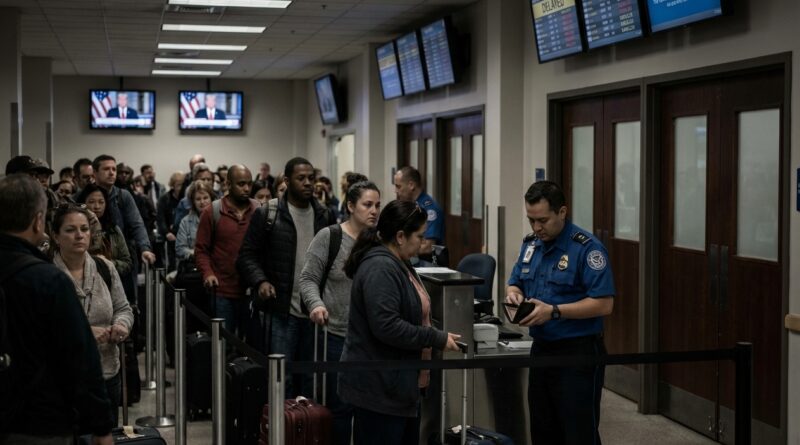
Flights usually do not stop just because the government shuts down. TSA officers and air traffic controllers are generally considered essential. But that does not mean your airport experience stays pleasant. When staff are working without pay, absenteeism can rise. Lines can grow. Patience gets thinner all around.
If you are flying during the shutdown, get to the airport earlier than usual, especially at major hubs and holiday periods. Do not cut it close.
Passports
Passport operations can continue if the office is supported by fee revenue and staff are available. But that is the kind of sentence that sounds reassuring until you need urgent help. If you have international travel coming up, check your passport expiration date now. If it is close, start the renewal process fast and pay for expedited service if needed.
National parks and museums
This is where shutdown life becomes visible to everyone. Some parks may close fully. Some may open in a limited way with fewer rangers, closed visitor centers, or poor maintenance. Smithsonian sites and other federal attractions can close or operate on reduced schedules.
What it means for disaster relief and local safety nets
This part matters more than many headlines let on. If your town is dealing with storms, wildfire, flooding, or another emergency, a shutdown can muddy the response. Core emergency protections may continue, but paperwork, inspections, approvals, and long-tail recovery work can slow down.
That means people who need help rebuilding may wait longer. Small towns that rely on federal field offices can feel this quickly. Housing support, rural development help, and agriculture-related assistance may also face delays depending on the program and agency.
For local nonprofits and community groups, the pain can show up as more people needing help at the exact moment federal coordination gets slower.
Small businesses, farmers, and local economies feel it too
If your business depends on federal permits, loans, grants, inspections, or customer demand from a nearby federal installation, a shutdown can hit revenue even if you never receive a government paycheck.
Small businesses may see delayed SBA-related work, slower approvals, and customers spending less carefully. Farmers may deal with delays in federal offices that handle loans, conservation paperwork, and crop-related administration. Real estate markets can also feel strain if federal income verification or loan processing slows in certain channels.
What to do this week if your paycheck could be affected
1. Prioritize cash flow, not long-term perfection
If you are a federal worker, contractor, or live with one, switch into short-term protection mode. Cover housing, food, medicine, utilities, and transportation first. Nice-to-have spending can wait.
2. Call lenders before you miss a payment
Banks, credit unions, landlords, mortgage servicers, and car lenders are often more flexible before an account goes delinquent. Ask about hardship programs, fee waivers, payment deferrals, or payroll interruption options. Be direct. Say your income is affected by the federal shutdown.
3. Save documents now
Keep recent pay stubs, work status emails, furlough notices, and benefit letters in one folder. If you need hardship help, those papers make the process faster.
4. Check your health coverage and prescriptions
If your job situation feels shaky, refill essential medications as soon as allowed. If you use flexible spending or benefit accounts tied to employment, make sure you know the rules.
5. Use local support early, not late
Food banks, community action agencies, utility aid programs, and employee assistance groups get crowded once panic spreads. It is smart, not shameful, to ask early.
What to do this week if you have travel coming up
1. Build in more time
Assume airport lines could be worse than usual. Leave earlier. Pick nonstop flights if you have a choice.
2. Check passport validity today
Many countries want at least six months of validity left on your passport. Do not assume “not expired yet” is good enough.
3. Watch official sources, not rumor posts
For airport conditions, follow TSA, your airport, and your airline. For passports, use the State Department website. Social media posts from strangers tend to be a mix of half-true and outdated.
What to do if you rely on federal services
If you need a passport, loan assistance, a permit, a farm office visit, an IRS answer, or help from a federal field office, try to do the task online first. If the matter is urgent, call before you drive over. A lot of shutdown frustration comes from people showing up to locked doors or lightly staffed offices.
If your need touches a state-administered program, such as parts of food or health assistance, check your state website too. Federal shutdowns often create a weird split where the state side is open but waiting on guidance or funding from Washington.
What not to do
Do not assume every benefit stops. Do not assume nothing changes either. Both mistakes cost people money.
Do not rack up high-interest debt because you heard “back pay always comes.” Timing matters. If cash is tight, a temporary hardship plan is usually safer than putting rent or groceries on the wrong credit card.
And do not wait for perfect certainty. In a shutdown, a lot of the damage comes from delay.
Why this keeps feeling so chaotic
Part of the confusion is that shutdowns are not one clean switch. They are a patchwork. One agency may keep paying staff from fee income. Another may furlough workers. One office may stay open in a limited way while a nearby office closes. That is why broad TV answers often feel useless.
The practical rule is simple. If your life touches the federal government in a direct way, expect friction. Maybe not disaster. But friction, delay, and uncertainty are real.
At a Glance: Comparison
| Feature/Aspect | Details | Verdict |
|---|---|---|
| Paychecks | Many essential federal workers keep working, but pay may be delayed. Contractors may have fewer protections. | Highest immediate risk for household budgets. |
| Travel | Flights usually continue, but TSA and airport operations may be slower. Passport help can be uneven. | Travel is possible, but plan for delays and extra time. |
| Benefits and local support | Major benefits often continue, but support, processing, and local coordination may slow. | Less about sudden cutoff, more about backlog and confusion. |
Conclusion
The 2026 federal government shutdown what it means for you comes down to one thing. Daily life gets more fragile around the edges. Pay can be delayed. Travel can get rougher. Help can take longer. Local offices can go quiet just when people need answers. The good news is that a little planning goes a long way. Check the services you use, protect your cash flow, and do not wait until a small problem becomes an expensive one. That is the real value here. Not more partisan noise, but a clear picture of how budget fights in Washington can touch TSA lines, disaster relief, and small-town federal offices back home. If you know where the weak spots are, you can make calm, informed choices and avoid getting blindsided.