America’s Pharmacy Squeeze: How The Quiet Collapse Of Local Drugstores Just Became A National Health Crisis
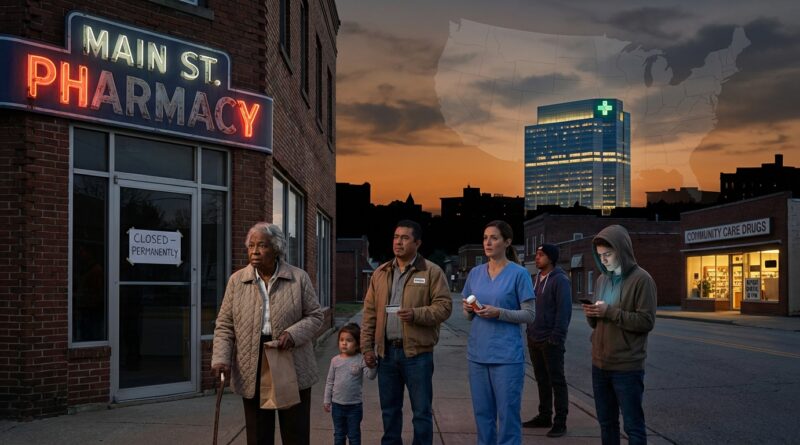
Your pharmacy was supposed to be the easy part. Call in a refill, swing by after work, head home. For millions of Americans, that routine is breaking down fast. Stores are closing. Hours are getting cut. Shelves are half empty. In some places, one exhausted pharmacist is trying to do the work of three people while a line wraps around the counter. If you are a parent trying to get an antibiotic at 8 p.m., or a senior who cannot drive 25 miles for a blood pressure refill, this is not a business story. It is a health problem. The pharmacy closures national health crisis 2026 story matters because it turns everyday medicine into a scavenger hunt. And the worst part is how suddenly it hits. One week your store is open. The next week, the lights are off, your prescription is in limbo, and nobody can tell you where it went.
⚡ In a Hurry? Key Takeaways
- Local pharmacy closures are no longer just inconvenient. They are creating dangerous delays for people who need steady access to medications.
- Start now by keeping a full medication list, asking your doctor for 90-day refills when appropriate, and identifying at least one backup pharmacy.
- If a pharmacy suddenly closes or cannot fill a critical drug, call your insurer, doctor, and nearby independent pharmacies the same day to avoid a gap in care.
Why this got bad so fast
What looks like a simple neighborhood problem is really a pileup of money issues, staffing shortages, and policy fights.
Big chains expanded hard for years. Then foot traffic changed, debt got heavier, and some stores stopped making enough money to stay open. At the same time, many pharmacies say they are being squeezed by low reimbursement for prescriptions, especially through the complicated middlemen known as pharmacy benefit managers, or PBMs.
That sounds far away from your medicine cabinet, but it is not. If a pharmacy gets paid less than it costs to buy and dispense certain drugs, it starts cutting hours, trimming staff, or closing locations. Then the pressure lands on the people left behind.
The labor problem is real too
Even where stores stay open, many are stretched thin. Pharmacists and technicians have been warning for years that workloads are getting unsafe. Vaccines, insurance calls, prior authorizations, shortages, patient counseling, phone lines, and retail expectations all hit the same counter.
When a store loses staff, everything slows down. Prescriptions wait longer. Calls go unanswered. Mistakes become more likely. Patients give up and leave without what they need.
Why this is a national health crisis, not just a retail story
If your jeans store closes, you order online. If your pharmacy closes, things can go sideways quickly.
Missing even a few days of some medicines can be serious. Think insulin, seizure medications, blood thinners, inhalers, heart drugs, antidepressants, or antibiotics started after urgent care. For many people, the local pharmacy is the front door to the health system. It is where they ask questions they forgot to ask the doctor. It is where medication problems get caught. It is where an older adult notices someone knows their name and notices when they seem confused or unwell.
When that disappears, the backup plan is often weak. Mail order is helpful for some people, but not for refrigerated drugs, urgent prescriptions, address issues, porch theft, or anyone who needs face-to-face help. Hospital emergency rooms are not built to replace neighborhood pharmacies, but families often end up there when they cannot get meds in time.
Who gets hit hardest
The pain is not spread evenly.
Seniors who no longer drive. Parents with sick kids after business hours. Rural families with one pharmacy in town. People with chronic illnesses who juggle five or ten prescriptions. Patients on Medicaid or Medicare plans with narrow pharmacy networks. People who speak limited English. Anyone without time off, reliable transportation, or money for rideshares.
In other words, the people with the least room for error.
What happens when your pharmacy closes overnight
This is where families get stuck. A store shuts down, or hours are cut so deeply it might as well be closed. Prescriptions may be transferred automatically, but not always neatly. Controlled substances can be more complicated. Insurance network rules may steer you to a different chain. A new pharmacy may not have your medication in stock. Your doctor may need to send a fresh prescription.
By the time you learn all that, you are already behind.
Common problems people run into
Phone systems loop forever. Transfer requests sit for days. An app says “in process” with no clear answer. One store has the prescription but no stock. Another has stock but is out of network. Your doctor’s office is closed. It is Friday evening.
That is how a normal refill turns into a weekend health scare.
Your playbook for this week
You do not need to solve the whole system. You do need a personal backup plan.
1. Make a simple medication list
Write down every medication you or your family member takes. Include drug name, dose, how often it is taken, who prescribed it, and what pharmacy usually fills it. Keep a photo of the list on your phone and a printed copy at home.
This matters more than people realize. If a store closes, you can call around quickly without trying to remember whether the inhaler is 90 micrograms or 180.
2. Ask about 90-day fills for maintenance drugs
For medications you take regularly, ask your doctor and insurer whether 90-day fills are allowed. Not every drug qualifies, but many do.
A longer fill does not fix the system. It does buy you breathing room.
3. Identify a backup pharmacy now
Do this before you are desperate. Check one chain store, one independent pharmacy if available, and one mail-order option through your insurance plan. Save their phone numbers.
Independent pharmacies are worth a look. Some are better at personal service, medication synchronization, and solving weird insurance glitches. They are under pressure too, but many are still the most human option in town.
4. Refill earlier than you used to
If your plan allows refill requests a week or so before you run out, use that window. Waiting until the last pill is now much riskier than it was a few years ago.
5. Ask which meds are hardest to keep in stock
Your pharmacist often knows which medications are frequently backordered or slow to arrive. If a drug has shortage issues, ask your prescriber what the backup options might be before a crisis hits.
6. Learn your insurer’s rules
This is annoying, but important. Find out which pharmacies are in network, whether mail order is required for some drugs, and what to do if a local store closes. Keep the member services number handy.
What to do if you are about to run out
If a medication is critical and you are down to a day or two, move fast.
Call in this order
First, call your current pharmacy and ask two direct questions. Is the prescription active, and can it be filled today? If not, is the problem stock, staffing, insurance, or no valid prescription?
Second, call one or two nearby pharmacies and ask whether they have the medication in stock and can accept a transfer. Be specific about strength and form.
Third, call your doctor’s office and explain that you may have a treatment gap because of a closure or stock issue. Ask if they can send the prescription to a new pharmacy right away, or discuss a safe alternative if the drug is unavailable.
Fourth, call your insurance plan if network rules are blocking the fill. Ask for an override if your local pharmacy shut down or cannot supply the drug.
For controlled substances, expect more friction
ADHD medications, pain medications, and some anxiety drugs can be harder to transfer and fill because of federal and state rules, shortage issues, and store policies. Start earlier than you think you need to. If you hit a wall, contact the prescriber quickly. A new prescription may be required.
When mail order helps, and when it does not
Mail order can be great for stable, long-term medications. It may save money. It may reduce trips. It can be a smart backup if your nearest store is shaky.
But it is not magic. Shipping delays happen. Packages get stolen. Temperature-sensitive medicines can be tricky. New prescriptions, dose changes, and urgent meds are often better handled locally. If you use mail order, keep close track of shipping dates and reorder earlier than the system suggests.
Questions to ask your local pharmacy now
You do not need a long meeting. Just ask a few useful questions.
- Are your hours changing soon?
- Do you expect any service interruptions?
- Can you put all my maintenance meds on the same refill schedule?
- What is the best way to request transfers if I need one?
- Which nearby locations are most reliable if you are out of stock?
A good pharmacy team will understand why you are asking. They are living this too.
What families should keep at home
You are not stockpiling. You are getting organized.
- A current medication list
- Insurance cards and member services number
- Doctor names and direct phone numbers
- One backup pharmacy contact
- Pickup authorization info if a neighbor or family member may need to help
For households with asthma, diabetes, heart disease, or seizure disorders, this kind of prep is especially important. One disruption can snowball fast.
What policymakers and companies need to hear
People are often told to shop around or use an app, as if this is just a customer service hiccup. It is not. Pharmacies are part of basic health infrastructure. If reimbursement is broken, staffing is unsafe, and closures are concentrated in places with fewer resources, the result is predictable. Worse access. More delayed treatment. More avoidable medical problems.
This is why the pharmacy closures national health crisis 2026 story matters beyond any single chain’s earnings report. Wall Street decisions, federal reimbursement policy, PBM practices, labor conditions, and drug supply problems all end up at one point of failure. The patient at the counter.
At a Glance: Comparison
| Feature/Aspect | Details | Verdict |
|---|---|---|
| Local chain pharmacy | Convenient when fully staffed, but many locations now face reduced hours, long waits, and uneven stock. | Good as a main option only if your location is stable. |
| Independent pharmacy | Often stronger on personal service and problem-solving, though availability depends on your area and insurance network. | Excellent backup, and sometimes the best primary choice. |
| Mail-order pharmacy | Useful for long-term maintenance drugs, but less ideal for urgent needs, controlled substances, or temperature-sensitive meds. | Best as part of a mix, not your only plan. |
Conclusion
This story can feel huge and abstract until it is your refill, your parent, or your kid’s inhaler. The good news is that there are a few practical moves that can lower the risk right now. Keep a current medication list. Refill earlier. Ask for 90-day supplies when it makes sense. Pick a backup pharmacy before you need one. Those steps will not fix reimbursement fights, labor shortages, or chain bankruptcies. But they can protect your household from the worst surprises. That is the value here. Turning a national headline into concrete decisions families can make this week, and giving people a realistic playbook if their local pharmacy cuts hours, merges, or shuts down outright.