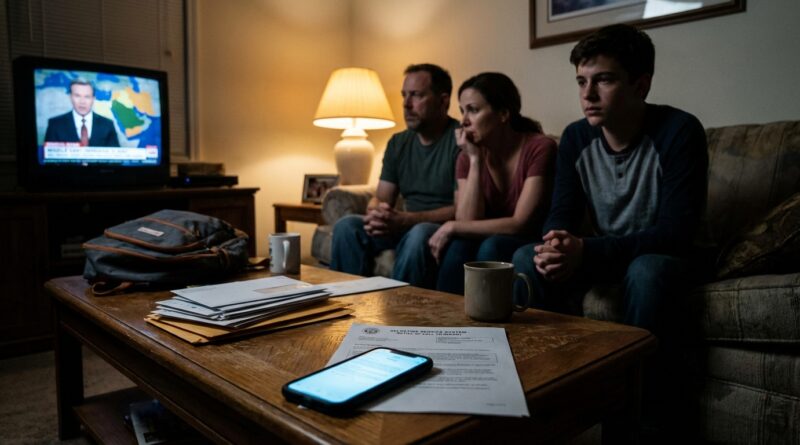
The New Draft: How a ‘Backdoor’ Military Buildup Could Redefine Everyday American Life
The headlines are loud, the rumors are louder, and a lot of families are stuck asking the same plain question: will the Iran war lead to a military draft in the US? That worry is understandable. When you hear about troop deployments, reserve call-ups, and politicians using vague phrases like “all options,” it can feel like the country is sliding toward something huge without anyone saying it clearly. Here is the short version. A full national draft is not what is immediately on the table right now. But that does not mean ordinary life is untouched. The more realistic near-term story is a quieter buildup. More pressure on active-duty troops, more use of reservists and National Guard units, more defense spending, more strain on household budgets, and more debates about surveillance, protests, and executive power. So if you are trying to figure out what this means for your family, your paycheck, or your kid’s future, that is exactly where to focus.
⚡ In a Hurry? Key Takeaways
- A military draft in the US is unlikely in the immediate future. Expanded deployments and reserve call-ups are far more likely.
- If you want useful updates, watch Pentagon deployment announcements, reserve mobilization orders, and congressional war-powers hearings over the next two weeks.
- The biggest near-home effects would likely be higher costs, stress on military families, and possible fights over civil liberties, not a sudden letter ordering most civilians into service.
The big question: Is a draft actually likely?
Right now, no. Not in the sense most people mean when they picture a draft.
For the US to restart a true military draft, Congress would need to pass a law changing how people are called into service. That is not a small paperwork move. It would be politically explosive, legally messy, and all over the news for weeks. You would not wake up one Tuesday and find out a hidden draft had already started for the general public.
That said, people are picking up on something real. The government does have other ways to grow military manpower before ever touching a broad civilian draft. That is where the phrase “backdoor buildup” makes sense.
What a “backdoor” buildup usually looks like
It usually means leaning harder on people already inside the system. Think:
- Longer deployments for active-duty troops
- More reserve and National Guard activations
- Stop-loss style policies that delay troop separations in a crisis
- Faster recruiting pushes with bigger incentives
- More defense contracts and industrial production at home
That matters because it can change daily life without ever becoming a formal draft.
Who is most likely to feel this first?
If this conflict stretches out, the first impact will not fall evenly across the country.
1. Active-duty military families
These families are always first in line for disruption. Extra deployments can mean canceled plans, sudden moves, child care problems, and long stretches of uncertainty. Even if the broader public barely notices, military households feel it immediately.
2. Reservists and National Guard members
This group is especially important to watch. Many people in the Guard and reserves have civilian jobs, kids in school, mortgages, and deep ties to their local communities. If call-ups increase, the effects spill far beyond military bases. Employers lose workers. Families lose income stability. Towns lose firefighters, police officers, nurses, mechanics, and teachers who also serve part-time.
3. Defense and shipping sectors
If the conflict grows, industries tied to logistics, fuel, shipping, cybersecurity, aerospace, and manufacturing may see more demand. That can create jobs in some places. It can also raise costs and create shortages elsewhere.
4. Young adults watching the future nervously
Even when a draft is unlikely, fear of one changes behavior. High school seniors, college students, and parents may start asking whether enlistment pressure will rise, whether scholarships will shift toward service, or whether military pathways will be pushed harder in struggling job markets.
What would have to happen before a draft became realistic?
This is the part that helps cut through panic.
A true draft would usually come much later in the chain, after several other steps failed or proved too small. Those steps might include:
- Major troop losses or a much wider regional war
- Heavy strain on current forces over many months
- Recruiting shortfalls that cannot be fixed with bonuses or policy changes
- A formal push in Congress to expand service obligations
- Broad political messaging preparing the public for that idea
In other words, a draft is not the government’s first tool. It is more like the break-glass option.
What could change at home even without a draft?
This is where the story becomes personal for almost everyone.
Prices and household budgets
Conflict in or around the Middle East can hit energy markets fast. Even if the US never moves toward a draft, families could still feel higher gas prices, shipping costs, and inflation pressure. That trickles into groceries, air travel, online orders, and utility bills.
Jobs and local economies
Some regions may see a boost from defense-related work. Others may feel instability, especially if reservists are pulled from civilian jobs or if markets react badly to a longer war. Small businesses can get squeezed from both sides. Higher costs in. Nervous customers out.
Civil liberties and public debate
This is not talked about enough. In tense wartime moments, governments often ask for more room to monitor threats, move faster, and limit certain risks. Sometimes that means more surveillance. Sometimes it means more aggressive policing around protests, speech fights on campuses, or pressure on tech platforms and communications systems.
None of that automatically means rights vanish. It does mean citizens should pay attention when officials frame broad new powers as temporary or necessary.
What rumors should you ignore?
A lot of viral posts mash together half-true facts and present them as proof a draft has already started.
Selective Service registration is not a draft order
The fact that the Selective Service system exists does not mean a draft has been activated. It means a registration framework is still on the books, mainly for men ages 18 to 25. That is very different from Congress authorizing actual conscription.
Deployments are not proof of mass mobilization
Sending more ships, aircraft, or troops to a region can be serious. It still does not mean the US is about to draft civilians. The military often shifts forces as a deterrent, as support, or to protect bases and allies.
“Emergency powers” talk can sound bigger than it is
Presidents do have significant powers in a crisis, but they do not get to quietly create a full draft on their own. If that bridge were being crossed, you would see major legal and congressional battles in public.
What should families actually watch over the next two weeks?
This is the useful part. If you want real signals instead of endless doom-scrolling, keep an eye on a short list.
1. Congressional war-powers hearings and votes
Watch whether lawmakers move to limit or expand the president’s authority. If Congress starts debating broader authorization language, that is important. It tells you whether this is staying contained or growing into something more open-ended.
2. Reserve and National Guard mobilization notices
These are one of the clearest signs of real strain. If call-ups widen across multiple specialties and states, that says more than hot cable-news panels ever will.
3. Pentagon briefings on force posture
Listen for phrases like “extended deployment,” “force protection,” “regional escalation,” and “sustainment.” Boring language often carries the most meaning.
4. Local school board and employer responses in military-heavy areas
This sounds small, but it matters. When local districts, hospitals, police departments, or large employers start planning around staff absences tied to reserve service, the conflict is no longer abstract.
5. Energy and shipping disruptions
If oil routes, insurers, or major cargo lanes are affected, your household may feel that faster than any military policy change.
What can your family do now without panicking?
You do not need a bunker. You do need a plan.
If someone in your family serves
- Review emergency contacts and important documents
- Check benefits, wills, powers of attorney, and child care backup plans
- Talk with employers early if reserve activation is a possibility
If no one in your household serves
- Build a little cushion for fuel and grocery price swings if you can
- Follow one or two reliable news sources instead of twenty noisy ones
- Explain the basics calmly to teens, who often see the scariest rumors first online
If you are worried about civil liberties
- Track local and federal hearings, not just viral claims
- Pay attention to protest rules, surveillance proposals, and campus policy changes
- Support local journalism that covers what your own city and state are doing
So, will the Iran war lead to a military draft in the US?
The honest answer is this. It is not the most likely near-term outcome. A broader military buildup without a civilian draft is far more plausible. That can still affect your family in real ways, especially if someone you love serves, works in a key sector, or is already stretched by rising costs.
The draft question matters because it gets at a deeper fear. People are asking whether this war stays “over there,” or whether it starts reshaping life here at home. On that point, the answer is easier. It absolutely could, even without a formal draft.
At a Glance: Comparison
| Feature/Aspect | Details | Verdict |
|---|---|---|
| Full military draft | Would require major political action, public debate, and congressional involvement | Unlikely in the immediate future |
| Reserve and Guard call-ups | Can expand faster and affect jobs, schools, and local communities quickly | Most realistic near-term manpower move |
| Everyday civilian impact | Likely to show up first in prices, policy fights, and stress on military families | Very possible, even without a draft |
Conclusion
The smartest move right now is not to dismiss every fear, and not to believe every rumor. It is to watch the few signals that actually matter. A national draft is not the most likely next step, but a slower military buildup could still touch paychecks, schools, privacy, and family plans in ways that feel very real. If you focus on who is most likely to be directly affected, how a longer conflict could change the economy and civil liberties at home, and which hearings, votes, and local actions are worth following over the next two weeks, you will be a lot better informed than someone stuck refreshing scary headlines all day.