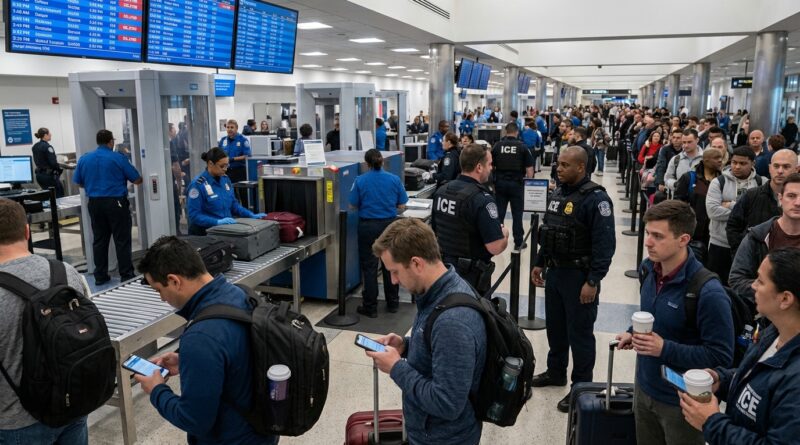
ICE At The Checkpoint: What Trump’s Airport Gamble Really Means For Your Next Flight
If you have a flight coming up, the headlines are enough to make anyone tense. You are trying to remember your boarding pass and charger, and now you are also supposed to figure out whether ICE agents at TSA checkpoints means longer lines, tougher questioning, or a security mess caused by a federal shutdown. The short answer is this. Most travelers should not expect airport security to suddenly turn into an immigration interview, but they should expect confusion, uneven enforcement, and some airports handling the strain better than others. ICE and TSA do not have the exact same job, and that difference matters. TSA screens for flight safety. ICE handles immigration enforcement. When those roles start brushing up against each other, travelers need to know what is normal, what is optional, and when to push back politely. That is the part missing from a lot of cable-news shouting, and it is the part that actually helps when you are standing in line.
⚡ In a Hurry? Key Takeaways
- For most domestic travelers, ICE agents at TSA checkpoints do not change the basic rule. TSA checks your identity and screens you for prohibited items, not your whole life story.
- Get to the airport earlier than usual, carry valid ID, keep your answers short and factual, and ask for a supervisor if questioning goes beyond routine screening.
- The biggest real-world risk right now is confusion and delay, not every checkpoint turning into a sweep. Document unusual encounters as soon as you safely can.
What is actually happening?
The fear comes from two things hitting at once. First, there are reports of ICE personnel being used or appearing near airport screening operations during a period of federal strain. Second, a shutdown or staffing crunch can make every extra body at a checkpoint look like a sign that normal rules are changing.
That does not automatically mean ICE has taken over TSA. In plain English, TSA is still the agency you deal with at the front of the screening line. Its job is aviation security. Think bags, scanners, ID match, and keeping weapons or dangerous items off planes.
ICE is different. ICE deals with immigration enforcement, removals, and certain federal investigations. Those powers are real, but they are not a blank check to turn every domestic flight into a border crossing.
So should you be worried about three-hour lines?
You should be prepared for delays. That part is real. If staffing is thin, morale is bad, or agencies are improvising, airport lines can slow down fast. But the reason is usually operational chaos, not because every passenger is getting a deep background interview.
What delays are most likely?
The most likely problems are boring but painful. Fewer screeners. Slower bag checks. More secondary screening because tired staff are being extra cautious. Confusing instructions. Longer waits if a checkpoint is short-handed.
If you are flying in the next few weeks, a smart rule is to add cushion. For domestic flights, aim for at least two hours at a minimum, and more at very busy airports or holiday periods. For international flights, three hours is still the safer play.
What TSA can ask, and what ICE can ask
This is the part people need made simple.
At a TSA checkpoint
TSA can ask for identification and boarding information. They can inspect your carry-on, screen your body and belongings, and ask routine security questions tied to the screening process.
If you do not have acceptable ID, that does not always end your trip on the spot. TSA has an identity verification process, though it can take time and may lead to extra screening.
If an ICE agent approaches you
The legal picture gets more sensitive. In many airport situations, ICE can ask questions, especially if they are working on a specific enforcement matter. But you still do not have to treat every question like a friendly chat you are required to continue forever.
For U.S. citizens on domestic flights, routine proof of citizenship is generally not part of standard TSA screening. For non-citizens, immigration status can be more complicated, especially if there is already some flag in a federal database or a specific enforcement action underway.
The key point is this. Domestic airport screening is not supposed to become a random immigration checkpoint just because agencies are under stress.
What you really need to show
For most adults flying domestically, bring a valid government-issued photo ID that TSA accepts. If your ID is older, damaged, or your name does not match your ticket, fix that before travel if you can.
Do not volunteer extra paperwork unless there is a clear reason. Your passport, green card, visa documents, and immigration papers may be essential for international travel or certain personal situations, but flashing a whole folder at the checkpoint can create more confusion, not less.
Keep your answers tight
If you are asked normal screening questions, answer clearly and briefly. Think, “Yes, that is my bag,” or “I packed it myself.” You do not need to fill the silence with a life story.
If questions shift into immigration status, legal history, or where your family came from, pause and pay attention to who is asking and why.
When should you ask for a supervisor?
Ask for a supervisor if any of these happen:
- You are being asked questions that seem unrelated to airport security screening.
- An officer refuses to identify their agency.
- You are being pressured to hand over a phone or unlock a device without a clear explanation.
- You are being separated from the screening line for unclear reasons.
- You believe you are being targeted because of language, ethnicity, religion, or accent.
You do not need to be dramatic about it. Calm works better. A simple line is enough: “I would like a supervisor, please, so I understand what is being asked of me.”
Can they search your phone?
At a domestic TSA checkpoint, a routine phone search is not part of normal screening. TSA may ask you to power on a device in some circumstances to show it is a real working device and not something dangerous. That is different from scrolling through your messages.
If another federal agent asks to inspect your phone, ask which agency they are with, whether you are being detained, and what legal basis they are relying on. The answer may not stop the encounter, but it helps you understand whether this is a security screening issue or something else entirely.
What to do in the moment if things feel off
1. Stay calm and do not physically resist
Even if an officer is overstepping, the checkpoint is a bad place to turn it into a shouting match. Stay steady. Keep your hands visible. Speak clearly.
2. Identify the agency
TSA? ICE? CBP? Airport police? Those are not the same thing. If possible, note names, badge numbers, uniforms, and where the interaction happened.
3. Ask if you are free to go
This is a useful line because it cuts through the fog. If the answer is yes, leave and continue your travel process. If the answer is no, you now know this is more serious than casual questioning.
4. Document after the encounter
As soon as you are safe and able, write down the time, terminal, checkpoint lane, exact questions asked, and names or badge numbers if you caught them. If there were witnesses, note that too.
5. Save proof
Keep your boarding pass, receipts, screenshots, and any written notices. Small details matter later.
Will this create real safety gaps?
That is the uncomfortable question under all of this. If a federal shutdown or staffing disruption causes experienced TSA workers to stay home, quit, or work stretched thin, safety does not usually fail in one big movie scene. It slips in smaller ways. Slower response. Missed details. More tired workers. More inconsistency.
That is why mixing agencies can make travelers uneasy. Even if the official line is that support is being provided, the public sees blurred roles and wonders who is focused on the X-ray monitor and who is focused on immigration enforcement. That confusion hurts trust, and trust matters in airport security.
What different travelers should keep in mind
U.S. citizens on domestic flights
Your main issue is likely delay and confusion. Bring valid ID. Arrive early. Stick to security-related answers. Ask for a supervisor if questioning goes far beyond normal screening.
Lawful permanent residents and visa holders
Carry the documents you are legally required to have, but do not wave them around unless asked. If an encounter moves into immigration-status questions, listen carefully and document everything afterward.
Mixed-status families
Travel stress is already high for families with different legal situations under one roof. If possible, keep copies of important documents stored securely on your phone and in a cloud account, and make sure at least one trusted person outside the trip knows your itinerary.
Practical airport game plan for the next few weeks
- Arrive earlier than usual. Add at least 30 to 60 minutes beyond your normal routine.
- Use the airline app and check airport social feeds for same-day checkpoint delays.
- Keep ID easy to reach. Do not dig through your bag at the podium.
- Charge your phone fully before arriving.
- Travel light if you can. Fewer bags means fewer chances for secondary checks.
- If something unusual happens, write it down immediately after clearing the area.
Rumor versus reality
Rumor: ICE at the airport means everyone gets an immigration check
Reality: For most domestic travelers, that is not how checkpoint screening is supposed to work.
Rumor: TSA can demand anything if you want to fly
Reality: TSA has broad screening authority, but it is still tied to transportation security. Not every invasive question is automatically proper.
Rumor: If you complain, you will definitely miss your flight
Reality: A calm request for a supervisor is often the smartest move when things are unclear. It may take time, but it also creates accountability.
At a Glance: Comparison
| Feature/Aspect | Details | Verdict |
|---|---|---|
| Checkpoint delays | More likely because of staffing strain, confusion, and extra screening steps, not because every passenger faces a full immigration interview. | Plan extra time. This is the most immediate impact. |
| Questioning by officers | TSA handles flight security screening. ICE has different authority. If questions drift away from security, ask who is asking and why. | Stay polite, answer briefly, and request a supervisor if needed. |
| Safety and oversight | The bigger concern is role confusion and tired staff during a federal crunch, which can weaken public trust and slow operations. | Not a reason to panic, but definitely a reason to stay alert. |
Conclusion
If all of this feels murky, that is because it is. The ICE-at-TSA story is unfolding in real time, in the middle of a federal shutdown fight, and a lot of coverage has treated it like political theater instead of a practical travel problem. But for millions of people heading to the airport, the useful questions are simple. Who is actually in charge at the checkpoint? How long should I expect to wait? What do I really have to show and answer? When should I ask for a supervisor? If you remember those basics, you are already in a better position than most travelers stuck sorting rumor from reality on the fly. Bring valid ID. Get there early. Keep your answers focused. Document anything that seems outside the lane. That will not fix the policy mess, but it will help you get through the airport with a little more control and a lot less guesswork.