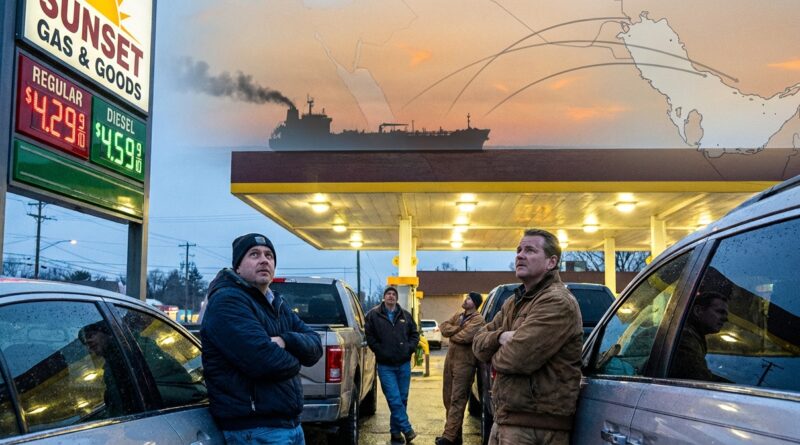
Gas Just Blew Past $4: What a Distant War Really Means for the American Commute
You do not need to be an oil trader to feel this. You just need to fill up your car on a Monday morning and watch the number jump past $4 a gallon. That is the maddening part. A missile strike or tanker attack thousands of miles away can land in your life like a surprise bill. If you are wondering how Iran, the Strait of Hormuz, and your commute got tied together so fast, the short answer is this: a huge share of the world’s oil moves through that narrow waterway, and when war puts it at risk, traders push oil prices up almost immediately. Gas stations then pass those higher costs along. It is not instant everywhere, and it is not all because of one event, but the chain is real. The good news is that once you understand that chain, you can make a few smart moves instead of just standing there angry at the pump.
⚡ In a Hurry? Key Takeaways
- The Iran war and threats to the Strait of Hormuz are raising U.S. gas prices because global oil markets react fast when a major shipping chokepoint is at risk.
- If prices stay high, your best moves are simple ones: combine trips, slow down on the highway, compare stations with an app, and avoid topping off out of habit.
- This does not mean every station is gouging you. Some areas will spike faster than others based on taxes, local supply, and how quickly stations need to buy new fuel.
Why a war far away shows up at your local gas station
The part of the story people skip is the middle.
Most of us see the first and last step. News from the Middle East. Then higher gas prices here. What gets lost is how one becomes the other.
The Strait of Hormuz is a narrow passage near Iran and Oman. A very large share of the world’s oil and liquefied natural gas moves through it. Think of it like a skinny highway exit that a big chunk of the global energy system has to use. If that exit is attacked, mined, blocked, or simply too dangerous for tankers and insurers, oil gets harder and more expensive to move.
That matters even if the United States produces a lot of its own oil. Oil is still priced in a global market. When global supply looks shaky, prices rise broadly. U.S. refiners pay more. Gasoline futures go up. Then the price on the sign by your neighborhood station starts climbing.
How Iran war and Strait of Hormuz are raising US gas prices
Here is the simplest version.
Step 1. Traders get nervous before gas stations do
Oil prices move on fear, risk, and expectations, not just on barrels already missing from the market. If investors believe the Strait of Hormuz could stay shut or become too dangerous to use, they bid oil higher right away.
Step 2. Shipping gets more expensive
Even if some tankers still move, war risk raises insurance costs, security costs, and delays. That adds cost before the oil even reaches a refinery.
Step 3. Refineries and wholesalers pay more
Refiners buy crude oil, turn it into gasoline and diesel, then sell it through a chain of distributors. If crude gets more expensive, the whole chain feels it.
Step 4. Pump prices rise, but not evenly
Some stations raise prices quickly because their next fuel delivery will cost more. Others lag a bit because they are still selling older, cheaper inventory. That is why one side of town can jump 30 cents while another barely moves for a day or two.
Why the U.S. is still vulnerable even though it produces a lot of oil
This trips people up.
The United States is a major oil producer. But that does not put us in a bubble. Oil is bought and sold in a global market. If supply is threatened anywhere important, the benchmark prices that shape fuel costs around the world tend to move together.
Also, not every refinery can use every type of crude in the same way. And gasoline itself is a regional market in many cases. So even if America is pumping plenty of oil, your local prices can still rise because the whole system has become more expensive and more stressed.
What usually happens next if the Strait stays shut
If the disruption is brief, prices can spike and then cool fairly quickly. Markets hate uncertainty, but they also calm down fast when a route reopens and tankers move again.
If the Strait stays closed or dangerous for weeks, the pain spreads.
You pay more for more than gas
Diesel prices matter too, and diesel is what moves a lot of America’s goods. That means groceries, deliveries, construction materials, and small business costs can all creep up.
Air travel and shipping can get pricier
Jet fuel and freight costs can rise along with crude. That can work its way into tickets, packages, and everyday products.
Inflation can get another push
When energy costs rise, they tend to leak into lots of other prices. It is one of the fastest ways a distant conflict shows up in your monthly budget.
Is this all just price gouging?
Sometimes local bad behavior happens, but usually the bigger story is simpler and less dramatic. Stations work on thin margins compared with what many people think. The largest chunk of what you pay is driven by crude prices, refining costs, distribution, and taxes.
That said, spikes can feel unfair because they move up fast and come down slow. Your frustration is not wrong. It is just that the cause is usually the global oil chain, not one guy in a back room deciding to ruin your week.
What you can actually do this week
You cannot reopen the Strait of Hormuz. But you can lower how much this spike hits your household.
1. Stop treating every trip like a separate mission
Combine errands. If you can hit the grocery store, pharmacy, and post office in one loop, you cut miles without much pain.
2. Slow down a little
On the highway, aggressive driving burns more fuel than most people realize. Even easing back from 75 to 65 can make a real difference over a week.
3. Check tire pressure
It is boring advice because it works. Underinflated tires waste gas. A few minutes with a gauge can save money all month.
4. Use a gas price app before filling up
When prices are volatile, the gap between nearby stations often gets wider. A 15 to 30 cent spread is common during jumps like this.
5. Do not top off unless you need to
Some people panic and fill every vehicle and gas can they own. That usually does not help. Buy what you need for the normal week unless there is a real local supply issue.
6. If you run a small business, build in a fuel cushion now
Delivery drivers, landscapers, cleaners, home repair crews, and rideshare workers feel these spikes first. If that is you, update your weekly budget today, not after a month of surprise losses.
What not to do
Do not rush into a giant financial decision because gas got ugly for a few days.
That means maybe do not trade in a working car overnight. Do not sign up for a loan you do not understand. Do not assume every spike means $6 gas is permanent. Sometimes these shocks fade faster than the headlines suggest.
If your car is old and thirsty and you were already planning to replace it, this may change the math a bit. But panic-buying a vehicle is rarely the smart move.
What to watch over the next two weeks
If you want to know whether this is a short punch or a longer squeeze, keep an eye on a few plain-English signals.
Is the Strait actually closed, or just risky?
Those are different situations. Risk alone raises prices. A sustained closure is worse.
Are tankers moving with escorts or rerouting?
If ships keep moving, even slowly, supply damage may be limited.
Are crude prices still climbing every day?
If oil settles down, retail gas often follows with a delay.
Is diesel rising as fast as gasoline?
If diesel jumps hard, broader price pressure on goods and services often follows.
The part nobody likes hearing
There is no magic switch that keeps American drivers fully protected from world oil shocks. We can produce more at home, release reserves, or shift habits over time, but when one of the most important energy chokepoints in the world is under threat, prices react.
That does not mean you are powerless. It just means the realistic response is not grand. It is practical. Spend a little less fuel. Shop smarter. Delay nonessential driving. Keep an eye on whether this is fading or spreading.
At a Glance: Comparison
| Feature/Aspect | Details | Verdict |
|---|---|---|
| Why prices jumped | War risk around Iran and the Strait of Hormuz threatens a major global oil route, so crude and fuel markets price in possible shortages fast. | Real and immediate, even before physical shortages fully hit. |
| How long it could last | A brief disruption may mean a short spike. A prolonged closure or repeated attacks could keep pressure on gas and diesel for weeks or longer. | Watch shipping and crude prices, not just scary headlines. |
| What drivers can do | Combine trips, drive a bit slower, compare station prices, keep tires inflated, and avoid panic buying fuel. | Small steps, but they add up quickly in a high-price week. |
Conclusion
This helps right now because the Iran war and the closure threat around the Strait of Hormuz have stopped being abstract cable news graphics and turned into $4-plus gas, pricier deliveries, and tighter household budgets. When people are getting blasted with maps, missiles, and dramatic footage, what they really need is a calm explanation of the chain between an oil tanker attack and the cost of getting to work or buying groceries. That chain is not mysterious once you lay it out plainly. A global oil chokepoint is threatened. Markets react. Crude gets more expensive. Fuel follows. You cannot control the conflict, but you can control a few parts of your response. And that matters. Understanding what is happening does not make the price sign less painful, but it does replace some of that helpless feeling with a clearer picture and a few solid moves you can make today.