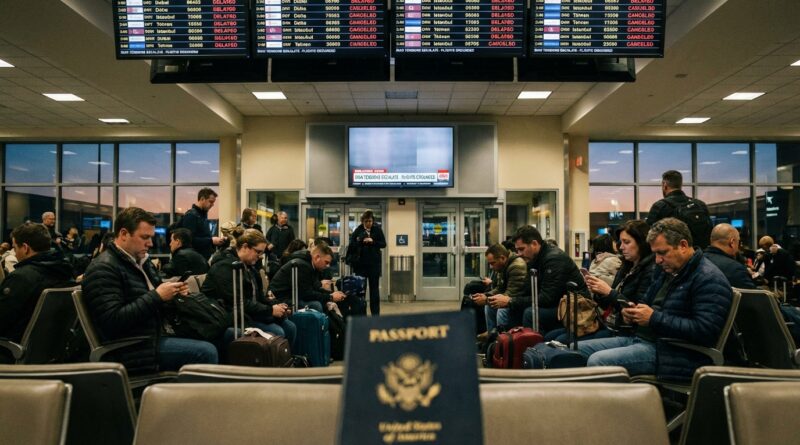
From Distant War To Local Fear: How The Iran Escalation Just Changed Daily Life For Americans Overseas
If you have family overseas right now, or you are about to board a plane for a work trip, study program or vacation, the Iran escalation suddenly feels a lot less like a faraway headline. That stress is real. You are seeing missile alerts on your phone, airlines changing routes, and embassy notices that sound urgent without always being clear. The big question is simple. What Iran war means for Americans abroad is not that every U.S. citizen overseas is in immediate danger. It means travel is getting more unpredictable, some regions are becoming riskier fast, and routine plans now need a backup plan. For many Americans, the biggest effects this week are practical ones. Flight delays, canceled connections, tighter corporate travel rules, higher insurance concerns, and pressure to stay in closer contact with the nearest U.S. embassy. The goal is not to panic. It is to make calmer, better decisions before a disruption turns into a real problem.
⚡ In a Hurry? Key Takeaways
- For most Americans abroad, the immediate impact is travel disruption and higher regional risk, not automatic danger everywhere.
- Register with the nearest U.S. embassy through STEP, check airline alerts daily, and review your employer or school travel rules before leaving.
- Do not rely on social media rumors. Use State Department alerts, embassy messages, and your airline app for the most useful updates.
What this actually means in real life
When people search for what Iran war means for Americans abroad, they are usually not asking about military strategy. They are asking something much more personal. Is my daughter safe in Europe? Should I cancel my Dubai layover? Can my spouse still take that job in the Gulf? Will my study abroad semester get pulled?
Those are fair questions. The answer depends a lot on where you are, how close you are to likely flashpoints, and how dependent your plans are on commercial air travel through the Middle East.
In practical terms, this kind of escalation often changes daily life in five ways. Flights get rerouted. Security rules tighten. Embassies send more frequent alerts. Companies and universities review travel approvals. Insurance and evacuation questions become more important very quickly.
Why flights are one of the first things to change
Airlines hate uncertainty. If missiles, drone activity, or military operations create risk in certain airspaces, carriers start changing routes fast. Sometimes that means a longer trip. Sometimes it means a missed connection. Sometimes it means your ticket still exists, but the route you planned around no longer does.
If you are flying soon
Check your airline app more than once a day. Not just your email. Apps often update before customer service can catch up. If your route passes through or near the Gulf, Israel, Jordan, Iraq, or nearby air corridors, build in more time and expect changes.
This matters even if your final destination is not in the Middle East. Long-haul routes between the U.S., Europe, Asia, and Africa can be affected by detours around conflict zones.
What to do now
Book directly with the airline if possible. Save screenshots of your ticket, seat assignment, and fare rules. If you have to travel this week, avoid tight self-booked connections. And if a trip is optional, this is a smart time to ask whether waiting a few days makes more sense.
What embassy alerts really mean
Embassy notices can sound scary because they are written carefully and often broadly. A “security alert” does not always mean “leave now.” It can mean avoid demonstrations, expect road closures, or be prepared for communications problems if the situation gets worse.
Still, these alerts matter. They are often the clearest signal that the U.S. government believes conditions could change quickly.
The one thing Americans abroad should do today
Enroll in the Smart Traveler Enrollment Program, often called STEP, if you are a U.S. citizen traveling or living abroad. It lets the nearest U.S. embassy or consulate send you alerts and makes it easier for officials to contact you in an emergency.
If you have a child studying overseas, ask if they are registered. If you have an older parent traveling, help them sign up. It takes a few minutes and can save a lot of confusion later.
Who should rethink travel right now
Not everyone needs to cancel. But some travelers should take a second look.
Higher-risk groups
Think harder about postponing if you are traveling alone, have a medical condition, depend on regular medication, do not speak the local language, or have a very complex itinerary with multiple layovers in affected regions.
The same goes for students heading into a semester abroad where the school is already sending mixed signals, and for workers whose employer may suddenly suspend nonessential travel.
Lower-risk but still worth checking
If you are going to Western Europe, East Asia, or Latin America, the direct security risk may be low. But you can still feel indirect effects through flight delays, extra screening, or policy changes from your company, insurer, or school.
What companies and universities are likely doing behind the scenes
Many large employers use travel risk services that score destinations and trigger policy changes automatically. That can mean your trip is still physically possible, but no longer allowed under company rules.
Universities do something similar. They look at State Department advisories, local partner updates, and insurance requirements. A program may be paused not because the campus abroad is unsafe today, but because getting students in or out has become less predictable.
Questions to ask before you go
Is my trip still approved? If conditions change, who pays for a rebooking? Does my health insurance cover me there? Is evacuation support included? If local internet or phone service gets spotty, what is our backup communication plan?
These are not dramatic questions. They are the boring ones that matter most when something goes sideways.
How to separate useful warning signs from panic online
This is where people get overwhelmed. Social feeds mix real video, recycled old footage, rumors, and worst-case guesses. During a fast-moving crisis, bad information spreads faster than airline or government updates.
Use this source order
Start with the U.S. State Department. Then the website or social channels of the local U.S. embassy or consulate. Then your airline. Then your employer, school, or travel insurance provider.
Group chats and social media should come after that, not before. They are helpful for anecdotal details, but not for decision-making.
A simple checklist for Americans overseas right now
If you or someone you love is abroad, this is the calm checklist I would use.
Do this in the next hour
Confirm where everyone is staying. Make sure they have a charged phone, passport access, needed medications, and at least one backup payment method.
Enroll in STEP or confirm it is already done.
Turn on airline app notifications and embassy alert notifications.
Do this today
Review the latest State Department advisory for the country you are in, and any nearby countries you may transit through.
Check whether your route depends on airports or airspace that may be affected by military activity or sudden restrictions.
Share a simple contact plan with family. For example, “If news breaks and phones are busy, I will text at 9 a.m. and 9 p.m. local time.”
Do this before any new trip
Ask whether the trip is essential. Read the fare rules. Check travel insurance exclusions. Save digital and paper copies of your passport and itinerary. Know the location of the nearest embassy or consulate.
Should you cancel a semester abroad or work assignment?
Sometimes yes. Often not yet. The key is whether the risk is direct and rising, or indirect and manageable.
If the destination itself is under an elevated warning, or if the program depends on fragile regional travel links, postponing may be the sensible move. If the destination is stable but the route is messy, you may just need more flexible planning.
Try to avoid all-or-nothing thinking. “Go exactly as planned” and “cancel everything immediately” are not the only choices. Delaying departure by a week, rerouting through a different hub, or choosing a refundable fare can be the middle ground that saves both stress and money.
At a Glance: Comparison
| Feature/Aspect | Details | Verdict |
|---|---|---|
| Flight impact | Reroutes, delays, longer travel times, and occasional cancellations, especially for routes touching the Middle East. | High chance of disruption, even outside the immediate conflict area. |
| Embassy guidance | More alerts, possible movement restrictions, and stronger advice to monitor local conditions and register with STEP. | Worth following closely. It is one of the most useful official signals. |
| Personal decision-making | Travel, study, and work plans may still be possible, but need backup options and more flexibility. | Do not panic, but do not wing it either. |
Conclusion
The hardest part of a fast-moving crisis is that it makes ordinary decisions feel loaded. Should you still go? Should your kid stay? Should you reroute, delay, or cancel? The good news is that you do not need to predict the next headline to make a smart call this week. You just need a few solid habits. Use official alerts, register with the nearest U.S. embassy through STEP, watch your airline closely, and ask tougher questions about flexibility, insurance, and backup plans. That is really what Iran escalation means for Americans abroad right now. Not instant panic everywhere, but a real need for better preparation and less guesswork. If this piece helps you make one calmer, clearer decision for yourself or someone you love, it has done its job.