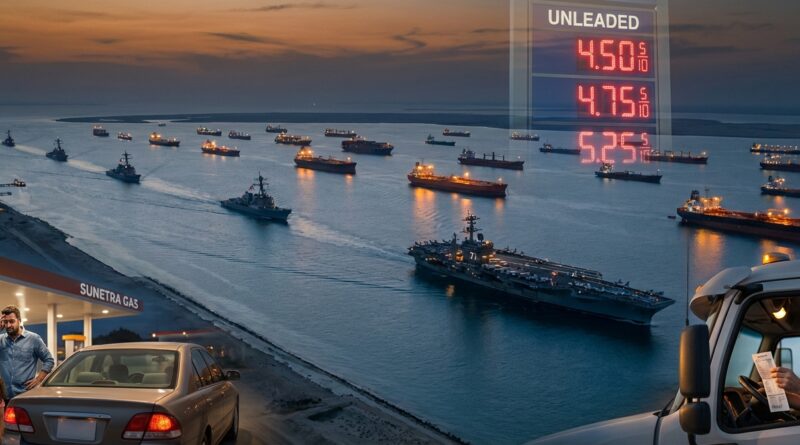
From Distant Strait to Local Pump: How Trump’s Hormuz Blockade Threat Could Hit Americans in Days, Not Months
You are not overreacting if this feels confusing and a little personal. A threatened blockade of the Strait of Hormuz sounds like one more faraway crisis, right up until you remember that this narrow waterway helps move roughly a fifth of the world’s oil. If traffic there is disrupted, Americans do not wait months to feel it. Oil traders react in hours. Gas stations often react in days. Airlines, trucking firms, delivery companies and grocery chains start recalculating costs almost immediately. That does not mean every headline equals instant disaster, and it does not mean your town will wake up to $7 gas overnight. But it does mean this is one of those global stories that can move straight into your weekly budget faster than most people expect. The big question now is not just whether the White House talks tough. It is whether actual shipping through Hormuz slows, insurance costs jump, or markets decide a wider conflict is likely.
⚡ In a Hurry? Key Takeaways
- A Strait of Hormuz disruption could push U.S. gas prices higher within days because oil markets price in risk fast, even before a full supply shortage shows up.
- If you are worried about costs, fill up a little earlier, delay unnecessary road trips, and watch crude oil and wholesale gas moves instead of doomscrolling war chatter.
- The biggest near-term risk is not just gasoline. It is also higher airfare, pricier shipping, and another round of inflation pressure on household basics.
Why this matters to Americans so quickly
The search term a lot of people are using right now is simple and blunt: Strait of Hormuz blockade impact on US gas prices. That gets to the heart of it.
The United States produces a lot of its own oil. That part is true. But oil is still priced in a global market. So even if a barrel pumped in Texas never goes anywhere near the Persian Gulf, its price can still rise because traders expect tighter world supply, more shipping risk, or military escalation.
Think of it like airline tickets before a holiday weekend. You may not be flying the busiest route, but if the whole system gets stressed, prices move everywhere.
What the Strait of Hormuz actually does
The Strait of Hormuz is a narrow shipping lane between the Persian Gulf and the Gulf of Oman. Huge volumes of crude oil and liquefied natural gas pass through it. If a U.S. blockade, an Iranian response, or simple fear of attack slows shipping there, the market starts adding a risk premium almost at once.
That premium is basically a panic surcharge. You do not see it labeled that way at the pump, but you will feel it.
How fast could gas prices rise?
Usually faster than people think, but not all at once.
Day 1 to Day 3
Oil futures and energy stocks are usually the first place the shock shows up. Traders react to headlines, military movements, insurance warnings and tanker traffic data. If crude jumps sharply, wholesale gasoline prices often follow.
Some stations raise prices almost right away, especially in places where fuel turnover is fast and distributors reset prices daily. Other stations take longer. That depends on local competition, state taxes and how much lower-priced inventory is still in the tanks.
Day 4 to Day 10
This is often when regular drivers start noticing. A jump of 20 to 50 cents per gallon is very possible in a serious disruption scenario. If the blockage is partial and temporary, that might be the main hit. If the route is truly choked off or military conflict expands, the increase could be steeper.
What matters most
The size of the price spike depends less on political speeches and more on three real-world signals:
- Are tankers actually moving through Hormuz?
- Are shipping insurers charging much more or refusing coverage?
- Are major producers finding other ways to move oil, or cutting exports?
It is not just your car. Flights and deliveries get hit too.
Jet fuel costs matter a lot to airlines. If crude rises and stays high, carriers often respond with route changes, fewer discount seats, and fare increases. You may not see every ticket jump overnight, but the cheap fares tend to vanish first.
Shipping firms face the same problem. Ocean freight, trucking and rail all have fuel exposure. Retailers do not pass every penny along instantly, but they do pass along enough. That can show up in online orders, store delivery fees, appliance prices, and eventually groceries.
Why groceries can get more expensive
Food prices are tied to fuel more than most shoppers realize. Farms use diesel. Food processors use energy. Refrigerated trucks use fuel. Imported ingredients come by ship. If energy costs stay elevated, that cost ripples through the chain.
The first wave is usually transportation-heavy items. Then packaged goods. Fresh produce can be hit too, especially if it travels long distances.
What about your 401(k)?
This is where people often get mixed messages. Higher oil prices can help some energy companies and hurt many others. That means your retirement account may not move in one clean direction.
Who could benefit
Oil producers, refiners, some pipeline firms and defense stocks may rise if markets expect a longer crisis.
Who could get squeezed
Airlines, cruise companies, transport firms, retailers, manufacturers and companies that depend on consumer spending often struggle when energy costs jump.
The broader market reaction usually depends on whether investors think this is a short scare or the start of a longer inflation problem. If markets think the Federal Reserve may need to stay tough on interest rates because of higher energy costs, stocks can wobble even more.
Who in the U.S. is most exposed?
Not every region feels this the same way.
Harder-hit households
- Long-distance commuters
- Families with older, less efficient cars
- Rural communities with fewer transit options
- Workers in travel, shipping, logistics and manufacturing
Harder-hit local economies
- Airline hub cities
- Freight and warehouse regions
- Places where household budgets are already tight from food and rent inflation
On the other hand, some U.S. energy-producing regions may see a short-term lift from higher oil prices. But that benefit is uneven, and it does not cancel out the wider cost pressure consumers feel.
What headlines should you actually watch?
This is where it helps to be a little boring. The dramatic headline is not always the useful one.
Watch these instead
- Brent crude and WTI crude price moves
- Average U.S. gasoline futures and wholesale rack prices
- Tanker traffic reports through the Strait
- Marine insurance rate changes
- Statements from Saudi Arabia, the UAE and major shipping companies
If you only watch cable-news countdown clocks, you will get a lot of heat and not much light.
What can regular people do right now?
You cannot control naval strategy. You can control a few household decisions.
1. Do not panic-buy fuel
Topping off early makes sense if your tank is low. Panic-filling every can in the garage does not. That behavior can create local shortages where none existed.
2. Protect this week’s budget first
If you have a road trip or long commute coming up, fill up sooner rather than later. If prices spike, even one earlier tank helps.
3. Delay optional travel bookings if fares are swinging
If you are planning a flight and prices are suddenly jumping by the hour, waiting for the market to find its footing for a day or two can help. If your dates are fixed, book sooner once you find a fare you can live with.
4. Expect sneaky inflation
The first hit is gas. The second hit is all the little things that cost more to move. That is where household budgets often get caught off guard.
5. Do not make big investment decisions based on one war headline
Your 401(k) is built for long stretches, not one tense news cycle. If you are close to retirement and worried, review your allocation calmly. Do not trade from fear.
Best-case, middle-case and worst-case scenarios
Best case
The blockade threat stays mostly political. Tankers continue moving, insurance costs rise only modestly, and crude settles back after a temporary spike. U.S. drivers may see a noticeable but manageable increase at the pump.
Middle case
Shipping slows, insurance gets expensive, and oil prices remain elevated for several weeks. Gas, flights and freight costs move higher across the U.S., adding fresh inflation pressure.
Worst case
Physical disruption becomes severe, regional conflict expands, and major energy exports are interrupted for an extended period. That is when you move from a painful gas-price spike to a broader economic problem involving inflation, consumer confidence and job pressure in exposed sectors.
At a Glance: Comparison
| Feature/Aspect | Details | Verdict |
|---|---|---|
| Gas prices | Can start rising within days if oil futures and wholesale fuel markets jump on shipping risk. | Most immediate effect for households. |
| Flights and shipping | Airlines and freight firms face higher fuel costs, which can push up fares, delivery fees and product prices. | Likely second-wave impact. |
| 401(k) and stocks | Energy shares may benefit, but broader markets can fall if investors fear inflation and slower growth. | Mixed result, not a simple up or down story. |
Conclusion
This is why the collapse of U.S.–Iran talks and a possible naval blockade around the Strait of Hormuz matters far beyond foreign policy chatter. That narrow passage carries a huge share of global oil and significant LNG shipments, so trouble there can move from distant map to local wallet very fast. For Americans, the real issue is not just whether a dramatic headline lands. It is whether fuel markets, airlines, shipping firms and employers start reacting in ways that raise everyday costs. The next few days matter because they will tell us whether this is a short market wobble or the start of a broader price shock. The useful move right now is to stay calm, watch the concrete signals, and prepare for some near-term budget pressure without getting pulled into panic. That way you can read the next wave of headlines with a clear head, and without falling for either fear-selling or fake reassurance.