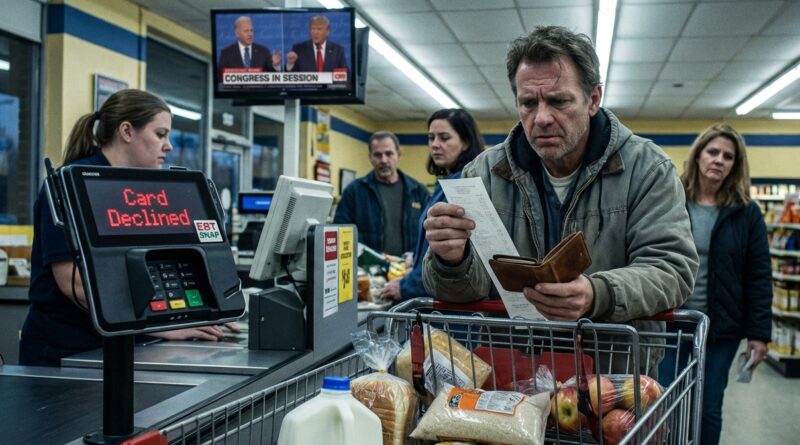
America’s New Fault Line: How the SNAP Showdown Is Quietly Redrawing the Country’s Moral Map
If you feel worn down by grocery prices, school lunch stress, and another round of Washington arguing over who deserves help eating, you are not overreacting. The fight over SNAP, the program many still call food stamps, is not some far-off budget chess match. It lands in checkout lines, on kitchen tables, and in classrooms where kids are trying to learn on an empty stomach. That is why this round of SNAP cuts national news matters more than the usual political shouting. It is forcing a blunt question. When families are working, prices are still high, and paychecks do not stretch, does this country see food help as a basic guardrail or as a prize people have to keep proving they deserve? That is the real story. The numbers matter, yes. But the deeper issue is moral. This is about what kind of hardship we are willing to normalize, and for whom.
⚡ In a Hurry? Key Takeaways
- SNAP cuts would hit working families, children, seniors, and disabled people first, not some abstract group in a spreadsheet.
- If you want to respond usefully, call your members of Congress, check your state’s SNAP policy updates, and support local schools and food banks now.
- This is not just a money debate. It is a test of whether the country treats food as a basic need or a political bargaining chip.
Why this fight feels so personal
Food aid debates often get framed like accounting exercises. A few billion here. A policy tweak there. But families do not live in budget documents. They live in the gap between payday and rent, between rising grocery bills and children who still need breakfast every morning.
SNAP exists to soften that gap. It is not luxury spending. It is help buying milk, cereal, rice, eggs, fruit, bread, and whatever stretches furthest that week. For many households, it is the thin line between getting by and falling behind fast.
That is why the SNAP showdown has become a moral fault line. One side sees the program as a practical form of shared stability. The other often talks about it as something to tighten, restrict, or use in a larger spending fight. You do not have to be a policy wonk to see what that means in real life. If aid shrinks while food costs stay high, people eat less, buy worse food, or skip meals so kids do not have to.
What SNAP actually is, without the political spin
SNAP is the Supplemental Nutrition Assistance Program. It helps low-income households buy food each month through an EBT card, which works a bit like a debit card at approved stores.
Most recipients are not the lazy cartoon figures that political ads like to hint at. Many are children. Many are older adults. Many have disabilities. Many adults who get SNAP are working, between jobs, caring for family, or stuck in low-wage work that simply does not cover the bills anymore.
Who depends on it most
The people most likely to feel cuts first are the people with the least room to absorb them.
- Children whose parents are already stretching every dollar
- Seniors on fixed incomes
- Disabled Americans facing high medical costs
- Workers in low-pay jobs with unstable hours
- Rural families with fewer nearby food options and longer drives to stores
That list matters. It cuts through a lot of the noise. When lawmakers talk about trimming benefits or tightening rules, the pain does not land evenly.
What happens if SNAP is cut
This is the part that often gets buried under slogans. If SNAP funding is reduced, or if eligibility rules get stricter, the effects show up quickly.
1. Families buy less food
This sounds obvious, but it matters. People do not replace missing food money with magic. They swap fresh food for cheaper calories. They delay purchases. They water things down. They skip meals.
2. Schools feel it too
Hungry kids have a harder time focusing, regulating emotions, and keeping up in class. Teachers see this before cable news does. Schools often become the backup safety net, whether they are ready for it or not.
3. Health costs rise later
When nutrition gets worse, health problems often get worse too. That can mean more stress, more chronic illness trouble, and more strain on clinics and hospitals down the line. Cutting food help can save money on paper in the short term while creating bigger costs later.
4. Local economies take a hit
SNAP dollars get spent fast, usually close to home. Grocery stores, discount retailers, and local communities feel that money moving through. So this is not just about individual households. It is also about what happens to neighborhoods already running thin.
Why politicians keep fighting over it
Because food aid sits right at the crossroads of money and identity. It is about taxes, yes, but it is also about beliefs. Who counts as deserving. Whether hardship is seen as personal failure or a common risk. Whether the country wants to punish need or reduce it.
That is what makes this showdown bigger than one bill. SNAP has become a symbol. For some lawmakers, cutting it signals toughness on spending. For others, protecting it signals a belief that basic dignity should not depend on perfect circumstances.
And here is the uncomfortable part. A lot of this debate is shaped by how easy it is to talk about poor families in the abstract. It is harder to say, out loud, that the tradeoff means more hungry kids, more stressed parents, and more seniors choosing between groceries and medicine.
The moral map that is being redrawn
Every budget tells a story about values. Not the speech version. The real version.
When lawmakers protect some spending but treat food aid as negotiable, they are drawing a line. They are saying which forms of pain are acceptable collateral damage. They are also showing who gets the benefit of patience and who gets tested again and again.
That is why this is a moral map, not just a fiscal one. It shows whether the country still believes basic nutrition is part of a decent society, or whether even that must now survive a loyalty test.
Dignity versus suspicion
A lot of social policy now runs on suspicion. Are people gaming the system. Are they trying hard enough. Are they worthy enough. But food is a terrible place to build a politics of suspicion. The cost of getting it wrong is too high, and it falls on people with the smallest voice in the room.
If a few bad cases exist, fine. Deal with fraud directly. But using those stories to justify broad cuts is like fixing a leaky faucet by shutting off water to the whole house.
Who actually loses if SNAP is cut
The short answer is simple. The people who lose first are the people already carrying the most strain.
- Parents who are working and still cannot keep up with food inflation
- Children whose nutrition affects learning and development
- Seniors trying to age with some stability
- People with disabilities facing extra costs most healthy lawmakers never have to think about
- Communities where every dollar spent locally matters
But there is also a broader loser. Public trust. When people see leaders turn basic food support into a bargaining chip, it teaches a bleak lesson about whose struggles count. It tells millions of families that their everyday survival is negotiable.
What readers can do that is more useful than doom-scrolling
Rage online may feel good for five minutes. Then dinner still needs to be made. If you want to do something that has a shot at helping, keep it practical.
Call your representatives
You do not need a perfect speech. Keep it plain. Say you oppose cuts to SNAP, that rising food costs are already hurting families, and that food aid should not be used as a bargaining chip.
Follow your state’s policy changes
Even when federal fights get the headlines, state rules and administration choices can shape who gets help and how easily they can keep it.
Ask schools what they are seeing
School staff often spot hunger trends early. Parent groups, teachers, and local districts can tell you whether more students are coming to school hungry or relying more heavily on meal programs.
Support local food groups, but do not confuse charity with policy
Food banks matter. So do school pantries and community meal programs. But they cannot replace a national nutrition program. Charity can help in a pinch. Policy is what keeps a pinch from becoming the new normal.
Why this story matters beyond one news cycle
It is easy to get numb. There is always another showdown, another deadline, another clip designed to make politics feel like a sport. But this one reaches into daily life in a very direct way.
Food is not symbolic when your fridge is half empty. It is not abstract when your child says they are still hungry. And it is not culture-war fluff when working people are paying more than ever for basics and still being told the problem is too much help, not too much strain.
That is why the SNAP cuts national news story matters. It tells us where the pressure is building, and it reveals what leaders are willing to risk in order to win a political point.
At a Glance: Comparison
| Feature/Aspect | Details | Verdict |
|---|---|---|
| Who feels cuts first | Working families, children, seniors, and disabled people usually absorb the shock fastest because their budgets are already tight. | Immediate real-world harm |
| Political argument for cuts | Often framed as fiscal discipline or stricter standards, but the savings can hide bigger social and health costs later. | Short-term win, long-term risk |
| What citizens can do | Contact lawmakers, track state policy, support local hunger relief, and push for durable policy instead of one-time charity. | Most useful response |
Conclusion
This is what makes the SNAP fight bigger than another ugly week in Washington. It connects a budget standoff to real kitchens, real classrooms, and real people trying hard to stay afloat. It helps answer two urgent questions clearly. Who loses if SNAP is cut? Mostly the people with the least cushion. And what does that say about the country we are becoming? That depends on whether we accept hunger as background noise or treat food as a basic part of human dignity. If readers take one thing from this, let it be this. You do not have to settle for spin or empty outrage. You can see the stakes plainly, speak up plainly, and push this debate back where it belongs, in the lived reality of families, not in the theater of political games.