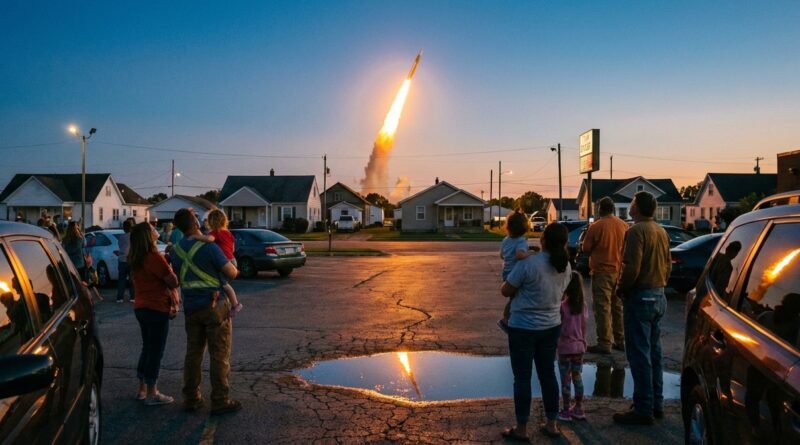
America’s First Return to Deep Space Since Apollo Just Launched. Why Artemis II Actually Matters for Life Back on Earth
It is fair to look at a Moon mission and think, “That is nice, but I have rent, groceries, and a news feed full of emergencies.” Most people do not need another space headline unless it connects to life on the ground. That is exactly why Artemis II matters. This is not just NASA taking four astronauts on a dramatic loop around the Moon. It is America’s first crewed trip beyond low Earth orbit since Apollo, and it acts like a stress test for the country’s future plans. The hardware, supply chains, training programs, safety systems, and political promises behind this flight all point to where federal money, private investment, and local jobs may go next. If this mission works, it will shape what schools teach, what factories build, how defense planners think about space, and which cities are ready to cash in. In plain English, the Artemis 2 launch impact on the United States starts long before any boots touch the lunar surface.
⚡ In a Hurry? Key Takeaways
- Artemis II matters because it is a real-world test of U.S. jobs, manufacturing, education, defense planning, and long-term space spending, not just a Moon photo op.
- Watch your state and city leaders now. Ask how they plan to compete for aerospace contracts, workforce training, and science education tied to the next wave of space investment.
- The value is bigger than prestige. The mission can drive safer materials, better communications, stronger supply chains, and new climate and industrial tech if communities are prepared to benefit.
Why this flight is a bigger deal than it looks
Artemis II is the first crewed mission in NASA’s Artemis program. Four astronauts launch aboard Orion, ride NASA’s Space Launch System rocket, travel around the Moon, and come home in about ten days. They do not land on the Moon. That can make the mission sound like a rehearsal.
It is a rehearsal. But rehearsals are where expensive plans succeed or fall apart.
This flight tests deep-space life support, navigation, communications, heat shielding, crew operations, and recovery procedures with humans on board. Low Earth orbit is one thing. The Moon is another. Once astronauts are that far out, there is less room for quick rescue and more pressure on every system to work exactly as promised.
That is why Washington, defense planners, universities, and manufacturers all care. If Artemis II goes well, confidence rises. Money follows confidence.
The Artemis 2 launch impact on the United States starts with jobs
Factories, suppliers, and skilled trades feel this first
Space programs are often described as if they happen in one giant NASA building. They do not. They are spread across a huge web of contractors, machine shops, software teams, materials companies, engine specialists, electronics makers, and logistics crews in many states.
When a mission like Artemis II launches successfully, it gives a green light to more orders and longer planning. Companies hire with more confidence. Community colleges have a better case for advanced manufacturing courses. States make a stronger pitch to attract aerospace suppliers.
This does not only help rocket engineers. It can help welders, electricians, quality-control technicians, composite materials workers, cybersecurity staff, and data analysts. Those are real jobs in real places, not science fiction.
Why local leaders should care now
If your governor or mayor talks about “future-ready jobs,” this is one of the places to prove it. Communities that move early can build training pipelines tied to aerospace and defense manufacturing. Communities that wait may watch the work go elsewhere.
A smart question for local officials is simple: what are you doing to bring in suppliers, research grants, and workforce programs linked to NASA and commercial space growth?
It will shape what schools and colleges teach
Every big national project changes education. The Apollo era pushed students toward engineering and science. Artemis can do something similar, but this time the need is broader.
Yes, the country needs more aerospace engineers. It also needs software developers, robotics specialists, materials scientists, climate modelers, medical researchers, and technicians who can build and maintain complicated systems.
That means Artemis II is not just a NASA story. It is a signal to school districts, universities, and parents.
What families should watch for
If your child likes science, coding, machining, electronics, or design, this mission is one more sign that these fields are not niche hobbies. They are tied to national spending priorities.
Look for:
- new STEM career programs in high schools
- community college certifications in advanced manufacturing and robotics
- university partnerships with NASA contractors
- internship programs tied to aerospace, defense, and satellite companies
The practical point is this. Artemis II helps turn “maybe this field matters someday” into “this field is clearly where investment is going.”
Why taxpayers should pay attention to the budget side
Space missions are expensive. People have every right to ask what they are getting back.
The honest answer is mixed. Not every dollar spent on Artemis turns into a miracle gadget for your home. But large programs like this do create technology spillovers, supplier networks, and technical know-how that show up in other parts of the economy.
Think about heat-resistant materials, sensors, communications systems, water recycling, miniaturized electronics, and precision manufacturing. These are useful far beyond rockets.
The harder question: is it worth it?
That depends on what kind of country the U.S. wants to be.
If America wants to lead in advanced industry, keep top technical talent, and set the rules for how space is used, then deep-space capability is not a vanity project. It is part of industrial policy, science policy, and national security policy rolled together.
If leaders sell Artemis II only as inspiration, they undersell it. The stronger case is that it is part of a larger decision about whether the U.S. still wants to build hard things at scale.
Space and climate tech are more connected than they seem
A Moon mission can sound very far from climate concerns. But the tools built for deep-space missions often feed back into Earth systems.
For example, work on power systems, efficient life support, remote sensing, materials durability, and autonomous operations can help industries trying to cut waste and run cleaner. NASA has long pushed technology that later found uses in energy, water management, monitoring, and resilience planning.
There is also a simpler connection. The same satellite and sensing ecosystem that helps scientists study Earth depends on a country that keeps investing in space capability.
No, Artemis II does not solve climate change. But it can help keep the technical base strong for industries that are trying to build cleaner and more resilient systems here on Earth.
It also matters for military space policy
This is the part many headlines glide past.
Space is no longer just a science zone. It is a strategic zone. The U.S., China, and other powers all understand that communications, navigation, surveillance, and national prestige now overlap in orbit and beyond.
Artemis II is a civilian mission, but it sends a message about U.S. competence. It shows whether America can still design, launch, operate, and recover complex human missions far from Earth. That matters to allies and rivals alike.
Why that affects regular people
Because military and civilian space policy influence budgets, contracts, research priorities, and infrastructure. They also shape how aggressively the U.S. invests in launch systems, space communications, and lunar capabilities over the next decade.
That can mean more federal money flowing into aerospace hubs, more pressure to secure supply chains, and more political fights over how space should be governed.
What success looks like, and what failure would mean
If Artemis II goes well
A successful mission would build trust in the hardware and make Artemis III, the planned lunar landing mission, easier to defend politically. It would help NASA keep Congress on board. It would encourage private companies to keep investing in lunar systems, launch services, and support technologies.
It would also strengthen the idea that the U.S. can still pull off giant, long-term technical projects.
If Artemis II runs into major trouble
Then everything slows down. Timelines stretch. Critics get louder. Budgets come under more pressure. Contractors and local economies tied to future Artemis work face more uncertainty.
That is why this ten-day trip is not just symbolic. It is a national confidence test.
How your community can avoid getting left behind
Here is the part most readers can actually use.
Do not treat Artemis II like a distant TV event. Treat it like an early warning sign about where money and opportunity may move next.
Ask local schools
- Are students getting access to robotics, coding, and engineering basics?
- Are counselors talking about technical careers, not just four-year degrees?
- Are there partnerships with local employers in manufacturing or aerospace?
Ask local government
- Is the city or state competing for aerospace suppliers and federal grants?
- Are workforce programs updating for advanced manufacturing and electronics?
- Is there a plan to connect veterans and skilled trades workers to these sectors?
Ask colleges and training centers
- Are they building programs around materials, automation, cybersecurity, and precision production?
- Do they have internship ties to relevant employers?
- Are they moving fast enough, or still teaching for yesterday’s job market?
That is the real civic takeaway. National missions reward prepared regions first.
What regular readers should take from all this
You do not need to care about rocket specs to care about Artemis II.
You just need to care about where the country is placing bets. This mission is one of those bets. It points toward more spending on advanced manufacturing, software, energy systems, remote operations, and strategic space capability.
It also points to a familiar American problem. Big opportunity does not spread evenly on its own. Communities with good schools, training pipelines, and business support tend to get more of the upside. Everyone else is told to clap from the sidelines.
That is why context matters more than awe.
At a Glance: Comparison
| Feature/Aspect | Details | Verdict |
|---|---|---|
| Human spaceflight milestone | First crewed mission beyond low Earth orbit since Apollo, testing Orion and deep-space operations with astronauts aboard. | A major national capability check, not just ceremony. |
| Economic impact | Supports aerospace contracts, supply chains, skilled trades, research labs, and workforce training across multiple states. | Strong upside for prepared regions and industries. |
| Everyday relevance | Influences budgets, STEM education, climate-related tech development, and military space planning. | Worth following because the policy effects reach far beyond NASA. |
Conclusion
Artemis II is easy to file under “interesting, but far away.” That would be a mistake. Right now, most coverage treats it as a science story or a flag-waving moment. But the bigger story is about concrete national choices. Budgets. STEM education. Manufacturing. Climate tech. Military space policy. This mission is one of those rare events that shows where the country may invest next and who is ready to benefit. If you want to know where your tax dollars are going, which sectors are heating up, and what questions to put to local leaders, this is the headline to watch. The Moon loop is dramatic. The real impact is what happens back here on Earth, in classrooms, factories, city halls, and job markets across the United States.